
Why does traditional office space waste budget
Traditional offices often have several overhead costs that, when left unchecked, can tally up to a high sum. Whether that’s maintenance fees, energy, insurance, or water bills.
These kinds of overhead costs are seemingly small. When added together, they can quickly become a much higher cost. Then, taking into consideration the hidden costs of the space itself, traditional leased offices present separate cost issues entirely.
In an office where there may be a meeting room, kitchen, and bathrooms, these additional spaces aren’t always being used but may still utilise energy and water. This is where the hidden costs start to come in. A meeting room that is underutilised is ultimately budget that is wasted.
What does unused office space cost businesses?
Desk rates for serviced offices in Leeds are fairly consistent: Rubberdesk reports a median of £325 per desk per month, while research reported by the Yorkshire Evening Post puts it at £343. For a four-person team, that’s roughly £15,600–£16,500 a year, with furniture, utilities, cleaning and usually business rates included. A traditional lease looks cheaper on paper, but once you add service charges, rates, utilities and fit-out to the rent, a small, leased office in Leeds can cost an estimated £26,000 a year. That’s around £10,000 more than the serviced option.
So where does that money difference appear? It happens because, unlike leased office spaces, serviced offices offer more flexibility, whether that be adjustable contracts or the actual space utilised within them. For instance, meeting rooms are booked on the basis of being needed, rather than sitting unused. Other key factors that drive the cost of a leased office include:
- The cost of fitting out an office, from decorating to purchasing and building new furnishings.
- Bills aren’t streamlined; they may also not be on a fixed rate, fluctuating and creating unpredictable outflows.
- Fixed contracts with set terms and break clauses, and no wiggle room for expansion or downsizing.
- Inefficient energy bills, resulting in energy use that doesn’t reflect the actual needs.
- Office dilapidations that require repairs, reinstatements of interior or redecoration
Why are serviced offices the solution to unused office space?
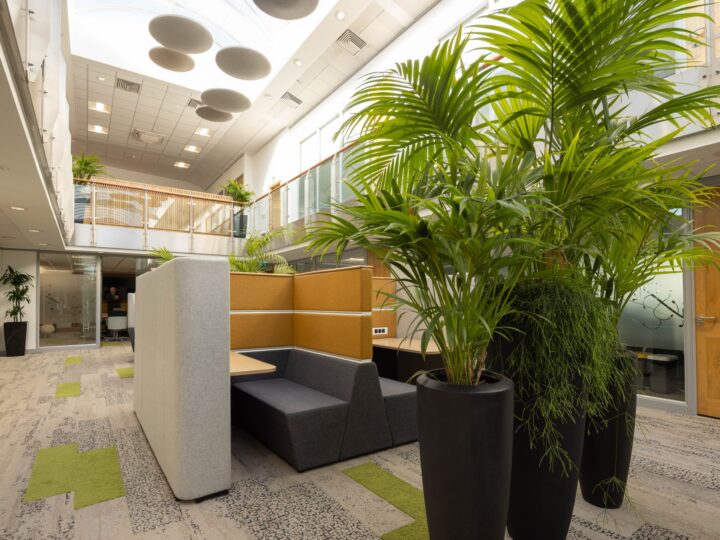
Serviced offices are truly the most cost-effective option, but beyond the cost of the space, they deliver so much more. A clean, readily set-up professional environment. Often with front-of-house amenities like meeting rooms, sound-proofed booths, a co-working environment and a shared kitchen, all of which would cost a significant amount more to have in a leased office environment.
All of these perks can be flexibly acquired and used to suit business operations. Being able to tailor the environment to the needs and realistic use of a team is what sets it apart from traditional counterparts.
One thing that is often overlooked with serviced office providers is the established culture and community that comes with setting up an office there. Every provider will be different, of course, but having access to an already established community of professionals makes things like networking, fostering a sense of belonging, and the opportunity to connect at events beyond business operations.
If you’d like to understand how we at WorkWell can save you money when considering a leased versus serviced office environment, our cost calculator is an excellent tool for establishing the marginal differences.
You can also get in touch with our team to discuss your requirements, find out whether we’re the right fit for your business and arrange an office tour to experience the space for yourself.