4 Compelling Reasons Why All Freelancers Should be in Co-Working

Being freelance has its advantages, although, if you’re completely honest, it can be lonely. Sure, you get out to visit clients in a convenient internet café every so often, but that’s not always the most conducive atmosphere for a professional meeting.

As you’ll find by reading this post, renting a co-working space not only combats this feeling of isolation; it offers the self-employed worker many other benefits, without restricting the freedom to come and go as you please.

In order to review how being in a co-working space is preferable to being based in a home office, let’s put it in the context of why over 1.72 million people in the UK    like to run their business this way.

What’s So Good about Freelancing?

The keyword which sums this up is FLEXIBILITY. You’re not tied to clocking in and out, so you can work around your timetable. Supposing you’ve chosen this lifestyle because you’re a parent, as many people have, you don’t have to decide whether to miss your child’s school play or take time off work. You can watch your child’s success, then catch up later in the evening.

What’s Not So Good about Freelancing?

It’s all very well being able to hang the washing out while the sun is shining or visit your elderly relative during the day, but with so many distractions, it can be hard to settle down and concentrate.

You can see a detailed analysis of how co-working is better than working from home here.

With a co-working desk, it can turn the downside around, giving you the best of both worlds.

Four Ways Co-Working Enhances Freelancing

Renting a co-working desk is not a huge investment. The positive aspects often result in increased revenue, which more than covers the cost. There are many other reasons why efficiency is enhanced, and here are four of them;

1. You have to be a special kind of person to keep motivated when working alone all the time. Having access to a co-working space doesn’t mean you have to commit to being there all day, every day. What it does give you is a fully functioning office with flexibility when you need it, plus an opportunity to interact with others in a similar position.

2. Sometimes you need to get out of the house to concentrate. A desk in a quiet, professional working environment with super-fast wifi and easily available tea and coffee (as opposed to a noisy internet café where you may have to waste time in a queue for twenty minutes) means you can be productive in no time at all.

3. Your credibility rating is raised in an instant with a professional meeting space to meet clients and an address to put on your website, which isn’t in a residential area. Increasing your credibility can lead you to more valuable customers.

4. Networking is a vital aspect of successful freelancing. By carefully choosing the right location, you can find yourself next to individuals offering services which are complementary to yours. The opportunity to provide collaborative packages to prospects is another way you can increase your income stream.

Realistically, there aren’t currently enough co-working spaces available in the UK for almost two million freelancers, so it might be wise to start looking into it now. If you’re beginning to think it’s the right move for your business, why not try a free week’s trial at WorkWell? There’s no obligation, but you might find it’s something you can’t live without.

What Are the Alternatives to Coworking?

Many people find co-working is an ideal set-up for their working practices. However, as with anything in life, it doesn’t suit everyone. To help you determine what’s best for your current situation, this post looks at the alternatives to coworking.

Which Office Space Will Work Best for You?

Looking at the different types of set up in turn, let’s start with the simplest choice, through to full-service offices.

1. A Registered Office

The most basic package is to opt for a registered office. This gives you an address to put on your website, giving you the appearance of working from a business park, raising the image of your company. It also has the advantage of peace of mind, in that your private home address is not advertised as your place of work on the internet.

2. Virtual Office Space for the Home Worker

Working from home has its advantages and disadvantages, many of which were discussed in more depth in a previous post.

On balance, you might feel you are a person who is more productive without the presence of others around you.

However, there will be times when meetings with clients in professional surroundings are essential.  A virtual hub gives you access to hiring private meeting rooms by the hour, where you can project a proficient image undisturbed, when required.

Other additional facilities are available, such as receiving post and taking messages by phone. Ask your office provider which of their services will help you run your business more smoothly.

3. Virtual Office Space for Larger Companies

Some larger companies have leased offices to carry out their daily business, but need a prestigious address and a place to hold meetings.

Take the law firm that prefers its solicitors to hold sensitive client phone calls behind closed doors, at their leased offices. There, they also have their own space where they need to archive a lot of material.  For this firm, an additional virtual office provides essential services they can dip into – mainly the address and hire of meeting rooms – whilst maintaining costs by running a physical office elsewhere.

4. Co-Working Desks

In terms of a company’s progression, the option of co-working often follows renting a virtual desk.  So this point has been mentioned for you to see where it fits in with the alternatives.  For an overview of what co-working entails, download your free copy of The Co-working Starter Pack.

If you are looking for a co-working space in Leeds or Harrogate, WorkWell is one place which offers a range of flexible packages which can be tailored to suit your needs.

One person who has found co-working to be advantageous is Terry Horne, MD of Avalon Media Services. He says:

“The business outgrew the previous premises. There’s everything we need here – reception, private meeting rooms and relaxed areas. Potential clients are impressed and don’t know it’s not yours!”

5. Serviced Offices

The next step up is renting a serviced office. Once a company reaches a certain size and has several personnel, it would be fair to say that it has outgrown the co-working model.  As there is now a critical mass of people working in it, the desire to be around other professionals is fulfilled internally.

A serviced office, as opposed to leasing one, still provides you with a range of facilities, such as a reception service and ongoing maintenance. Bear in mind that these will save you time and aggravation, as well as cost.

If you have two employees, including yourself, you may be at an interim stage. That covers a progressive range of alternatives to co-working, so hopefully you will have a clearer idea of what your organisation needs.  If you’re still not sure, come in to WorkWell for a chat. We’ll talk through your situation and help you work out what is going to be the right option for you.

The facts about flexible working for employers

 Over the last few years, flexible working has become something of a buzzword in the business world. Some companies have embraced it wholeheartedly, others have shied away from it completely, and most have adopted an approach to it that falls somewhere between the two.

But what actually is flexible working and what could it have to offer your business?

A definition of flexible working

As you can imagine, it’s hard to fully define something that has the word ‘flexible’ in the title! The great thing about adopting flexible working practices is that it’s a non-prescriptive working style that’s easily adaptable to any business.

The CIPD defines flexible working as ‘a type of working arrangement which gives a degree of flexibility on how long, where, when and at what times employees work.’ It often includes options such as flexitime, remote working, compressed hours, working from home and zero-hour contracts.

What are the benefits of flexible working?

There are some fantastic benefits to flexible working. It may seem counterintuitive, but study after study has shown that businesses that offer their employees flexibility over working hours and location get the benefit of greater productivity.

Here’s what employees have to say about flexible working:

  • 83% of employees say that it boosts their job satisfaction – A MokahHR review
  • 76% of employees say it improves their work/life balance – Gallup’s survey
  • 73% of managers say it improves productivity – Tech.co survey

Is there are downside to flexible working?

With more and more forward-facing businesses adopting this working practice, it makes sense to ask if there are any downsides.

The only real downside to flexible working is that there can be an initial adjustment period while employers and employees get used to the changes. There can also be an upfront investment for businesses to equip employees with the laptops and devices they need in order to be able to work efficiently from home or other remote locations.

However, the cost and time involved in this initial period are typically seen as a very small price to pay for the long-term benefits of a happier team.

Do employers have to offer flexible working?

Though more and more businesses are seeing the value in promoting flexible working options to their employees, some are still unsure about offering them.

There are some laws and regulations to be aware of here. In the UK, all employees have the right to request flexible working, so long as they have worked for the same employer for twenty-six weeks or more. However, at the moment, employers are only obliged to deal with requests in a reasonable manner and can turn them down if they have a good business reason for doing so.

How can you get started?

If you think flexible working is the way forward for your business, there are several ways you can dip your toes in the water and start exploring the benefits.

Smaller businesses may want to look into moving into a flexible-friendly co-working office. Tempted? Why not take a look at our fantastic Leeds co-working space?

Five essentials for keeping your team engaged when working remotely

One of the biggest challenges when it comes to working remotely, which we’ve encountered, is keeping connected to your team as well as engagement. Without face-to-face contact on a daily basis, employees can often feel disengaged as they are cut off from the day-to-day rhythm of business and one step removed from your company culture and goals.

We’re all human, which means we thrive on human interaction, which is one of the key things we miss when working from home. This can in turn impact company culture. With that in mind then, how can we ensure your teams are getting what they need in order to remain engaged and continue to produce their best work during this period.

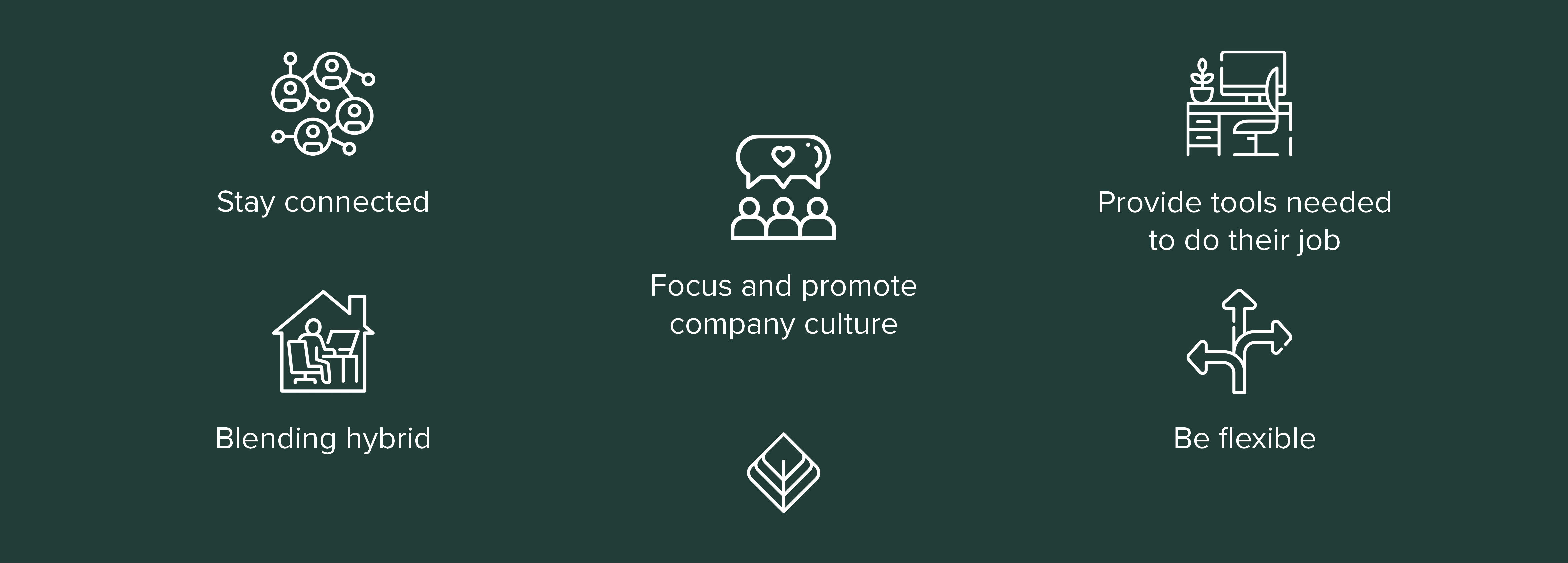
To help keep your team motivated and engaged while working remotely, we’ve put together our top 5 tips:

5 essentials for working remotely Blog Header-1

1. Stay connected

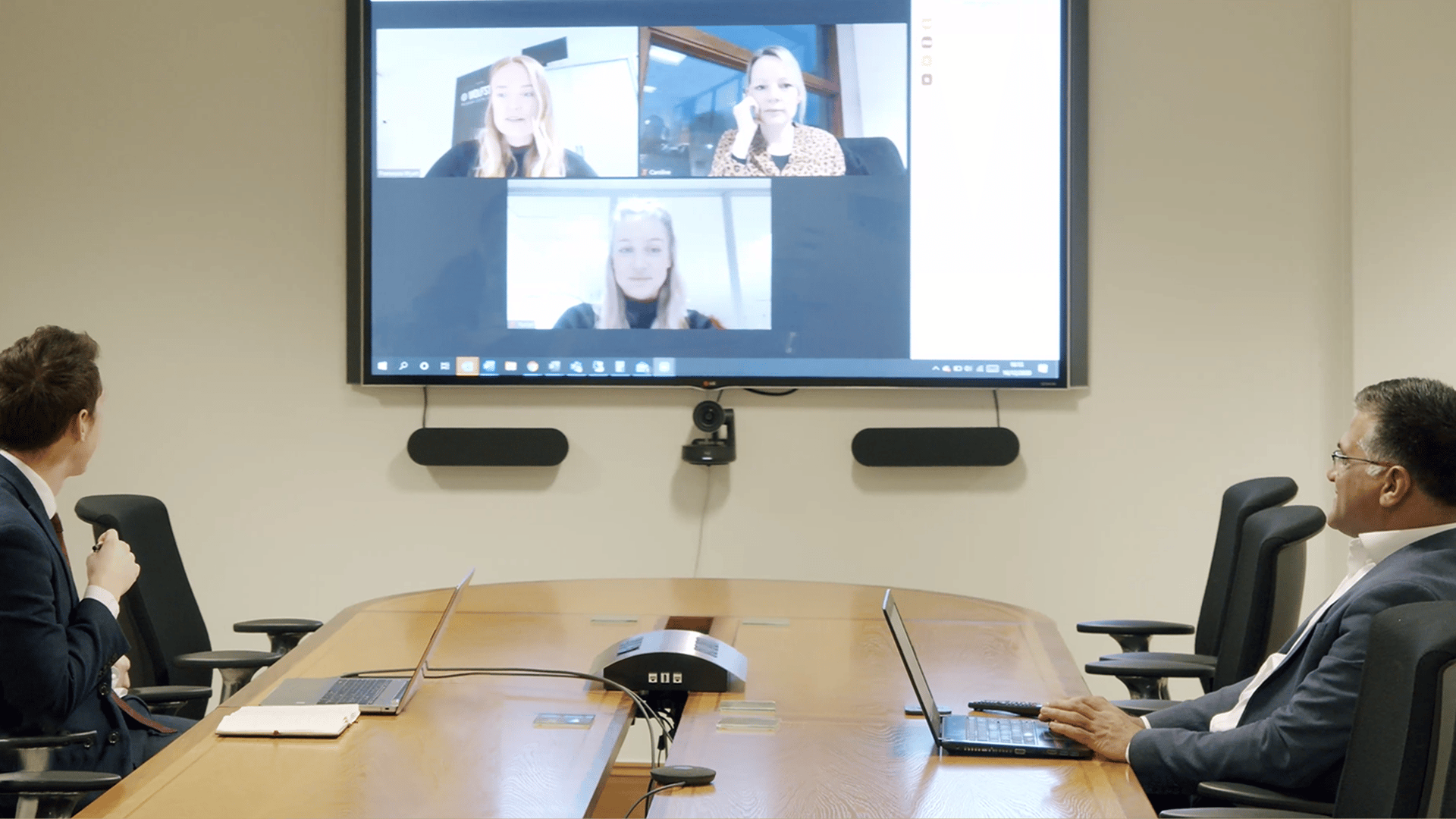
When working remotely, technology is key. Keeping open and effective communication channels are so important when managing a team remotely, and using communications platforms such as Teams, Zoom, Asana etc. are effective ways to maintain that connection, while effectively managing remotely the delivery of tasks, even if you’re not in the same room.

Be sure to also utilise your video conferencing options in order to keep that face-to-face interaction and collaboration that would potentially be affected when working from home if not managed correctly. Emails and phone calls are all well and good but having the ability to see your team while you’re discussing business topics can help your team feel more present in the office environment and allows you to get a better sense of engagement through body language.

And in terms of timing for these calls, we’re not saying you have to be checking in every hour but arranging team meetings perhaps daily is a good way to ensure everyone is aligned before the start of the working day.

VC Blog Image

2. Give employees the tools needed to do their job

A key factor in ensuring your team feels engaged is empowering them to do their best work no matter where they are. By utilising the right tools and technology you can keep your team productive, connected and centred while also aligning their work life balance.

Utilising technology and specialist tools, such as laptops, mobile phone, online servers to access documents, also allow more flexibility for, your team, which in turn can make a positive impact on their productivity and engagement.

Where you need to be careful is in setting boundaries for your communication tools, ensuring that your teams work-life balance remains intact despite being at home. It’s important to ensure just because your team are working from home that their work doesn’t unintentionally impact and bleed into every aspect of their life.

_Q3A6647-3

3. Keep focus on the company culture and promote when/where you can

Maintaining your company culture when your team isn’t in the office can be challenging. As it’s not possible to carry about the same team building and collaborative activities sometimes connections with team members can be lost.

One way to maintain your company culture while your team is working remotely is by being as open and honest with your team as possible, keep your team updated on what’s going on and ensure they don’t feel like things are being hidden from them. It’s vital to keep everyone informed both on the good news and the bad news.

It’s also important to show that you trust your team to get on with things. A number of studies have shown that employees who feel trusted are much more likely to have high levels of motivation and positivity too. According to a study by Queens School of Business and by the Gallup Organization, disengaged workers had 37% higher absenteeism, 49% more accidents, and 60% more errors and defects.

And where you can, maintain a sense of togetherness, even if that is virtual. Activities such as online team socials, virtual quizzes are a great way to achieve this.

4. Ensure team cohesiveness by blending hybrid options

Giving your team choice in where they work is key to keeping them engaged. Going forward, adopting a hybrid model gives your team the flexibility to choose where, when and how they work. For many businesses offering “hybridity” can provide a great way of maximising productivity and flexibility while empowering your team with and meeting the needs of your business.

Though a hybrid option can only work if all of the above are in place. For now, businesses who can are working from home, which in turn removes the element of choice, but once you’ve nailed the remote team engagement, employing a hybrid working strategy is the best way to empower your team and managers and ensure they remain productive and engaged, working in a way that they choose.

WorkWell-Offices-Zoom-Booth

5. Be flexible

Try not to be too prescriptive with your day. While you may need some structure and set times for team meetings and collaborative sessions, ensure you’re giving your team the flexibility in how they carry out the rest of their work this includes the solutions you offer them.

At WorkWell our aim to create outstanding workspace solutions that allow our clients to attract, retain and promote the best teams for their business by providing a solution that can be configured to meet exactly what your business needs and your core objectives. Offices that not only offer an outstanding environment, but also hassle-free management, allowing you to focus on growing and developing your business.

For more tips and advice, sign up to our blog below.