What to Look for in a Co-working Space
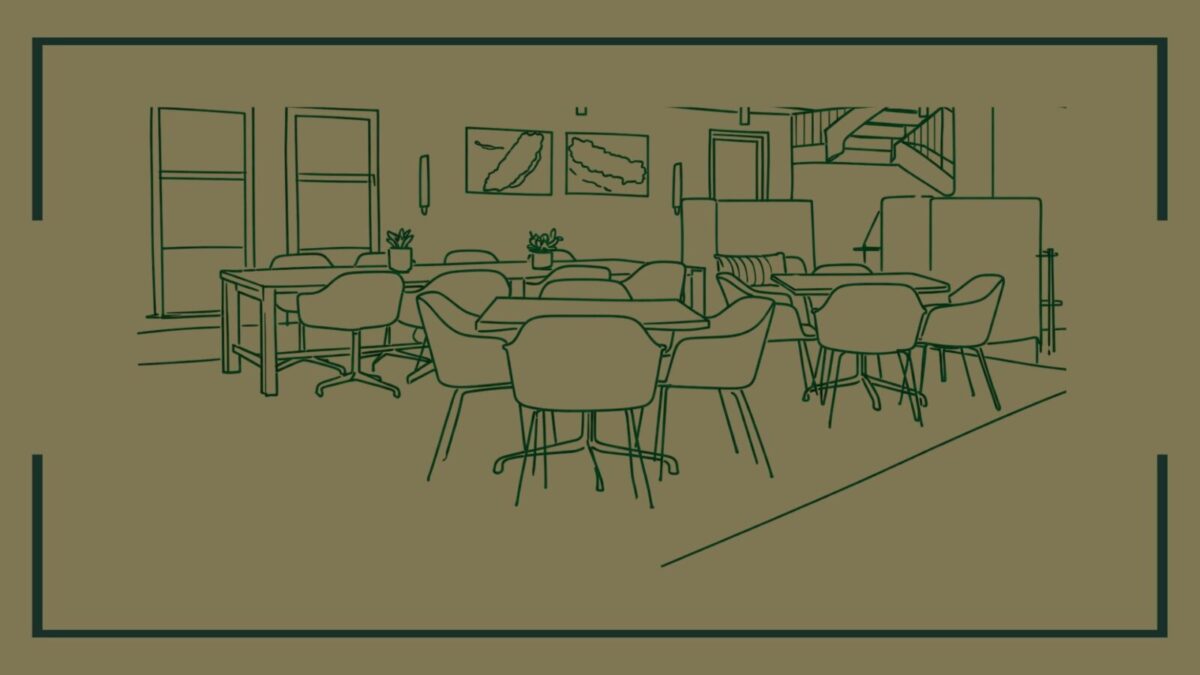
Choosing the Right Co-Working Space for Your Business

Finding the right co-working space is key, as not all managed co-working spaces offer the same type of working environment.

Your co-working space will ultimately affect how your team feel, their productivity and their ability to deliver. Great co-working spaces should offer:

  • Opportunities to connect, inspire, motivate and collaborate, fostering productivity and growth
  • A professional, well-maintained and motivating environment
  • The option to be part of a supportive business community

Facilities & Infrastructure

The facilities you have access to, can shape the experience you have with a co-working provider. At a minimum, a great co-working space should have high-speed Wi-Fi, ensuring interruption-free and reliable working.

While additional breakout spaces are not available in every managed office, they can enhance flexibility and comfort throughout the day.

At WorkWell, we offer more than just a co-working desk. We provide soundproofed booths and Zoom pods for solo sessions, private calls or conferences.

Community & Culture

Culture

For many businesses, the appeal of co-working lies in the opportunity to naturally connect and collaborate with others. Culture plays a central role in forging that experience.

When deciding what the most suitable type of workplace is for you, identify the qualities of a workplace that would best suit your business. You can better understand a company’s culture by observing things like behaviour during your tour. i.e. Are people welcoming? Do people demonstrate they have a community-driven culture?

It can be useful to establish who you may be working alongside. The types of business within a managed office space often reveal a great deal about the type of culture there.

Community

Experience is as much about the culture of your work environment as it is about increasing the chances of connecting with individuals beyond your business. For freelancers and self-employed people, this is a major factor in selecting co-working.

When trying to identify if a co-working provider created collaborative or networking opportunities, look at their social channels and website to identify any community-based events. Businesses that clearly signpost event calendars or member programming are ideal, as they explicitly demonstrate their ability to connect members.

Avoid gravitating to businesses that use buzzwords without backing up claims with evidence. Itโ€™s easy for businesses to say, without really doing. Finding evidence of these types of events is a more effective way to ensure the community youโ€™re joining is aligned with what you want.

Flexibility & Pricing

Flexibility is one of the major benefits we often consider with co-working solutions, but that isnโ€™t always the case. So, itโ€™s important that when youโ€™re signing a contract, you know exactly what’s in it.

Look at the contract’s length and terms; some contracts may be fixed dates, whilst others may be shorter-term contracts designed to adjust at a moment’s notice to accommodate evolving business needs. Identifying things in the contract, such as:

  • Price increase
  • Deposit requirements
  • Renewal terms
  • Exit clauses

True flexibility means having the option to scale up, scale down or leave without heavy penalties.

If you expect your business to grow, assessing the providerโ€™s ability to adapt with you is essential. A strong co-working provider will aim to make any transition smooth, allowing your business to remain within the community while adjusting your physical workspace.

Questions you can ask

One of the best ways to prepare for setting up in a co-working environment is prepare questions for different providers to gauge how suitable the space and company are.

1.            What is covered in a basic co-working contract?

2.            What kind of businesses already utilise the co-working space?

3.            What are the business hours the space operates under?

4.            Are there parking or transport links that make it efficient to travel there?

5.            Do co-working members receive any business support? I.e. a business address, mail handling, etc.

Co-working etiquette: A guide to Conduct in Shared Workspaces

What is co-working?

Co-working environments bring together professionals across differing industries, in a shared environment designed with flexibility, productivity and connection in mind. Whether you work freelance, as part of a growing business, or as a remote worker, you can access a professional office without commitment to a traditional office.

Often built around flexible seating, rather than assigned desks. Allowing co-working users to work alongside others whilst reaping the benefits of professional facilities.

Is there an etiquette observed in co-working spaces?

There are unwritten rules for working in a shared work environment that might not be explicitly stated but are observed.

Creating a welcoming atmosphere is in part about the office design, but is also attributed to members who make an effort to greet or smile at peers.  Introducing yourself to other professionals not only helps create a friendly, inviting ambience but also creates opportunities to network with new businesses.

An important aspect of co-working spaces is having an environment where it’s easy to focus. To avoid disrupting productivity, keeping it at a reasonable volume is recommended. Chatting isnโ€™t banned, and it shouldnโ€™t be. But consider the noise you make; avoid playing music or shouting to somebody across the space. Being aware that people are working and will need a quiet, disruption-free environment is key to using a shared workspace.

One of the great aspects of co-working spaces is the tidiness of the environment and the lack of maintenance on the members’ part. One of the ways you can ensure that it stays inviting is to keep the space clean by tidying up after yourself. Whether it’s recycling scraps of paper, wiping up a spill, or tidying up your small messes ensures everybody can enjoy a tidy work environment.

Dressing for co-working isnโ€™t like in a traditional office, but avoiding dressing down or too casual. It helps keep the environment feeling professional by avoiding a pyjama day in the office.

One of the unspoken rules of co-working is to avoid bringing in guests and visitors. Seating is reserved for members, so if spaces are being given to those without memberships, it then impacts other members’ ability to use the facilities.

Connecting with other co-working users

Connecting with your peers may feel intimidating, but it has clear advantages. One of the biggest draws for businesses is to strengthen their portfolio of professional connections. Itโ€™s invaluable knowing businesses across sectors, whether it’s for gaining unique perspectives or simply having an awareness of business beyond your own.

Some of the simplest ways to connect and collaborate are to:

  • Make an introduction. The first step to any relationship is establishing a rapport. Saying hello and goodbye can help shape a positive impression.
  • Sit next to new people in the co-working spaces. Proximity creates the opportunity to connect with others.
  • Bring along business cards, you never know when the opportunity to pass on your details will arise!
  • Attend events held by your co-working space provider. Not only will you get to see familiar faces, but meeting news ones also meet new ones.
  • Define the purpose of your networking: what is it you want to gain from a networking experience? Establishing why it is you want to network will help you in your approach to doing so. I.e., if itโ€™s for the social aspect, a more casual approach can be taken.
  • Reflect on previously successful networking experiences to delineate what has and hasnโ€™t worked previously. This can help guide your future approaches to networking.
  • Offer help. Whilst it isnโ€™t a direct method of networking, it shows your peers youโ€™re a team player. Creating positive impressions is one of the most effective methods for connecting.

Itโ€™s not always obvious that putting yourself or your business out there will, in fact, benefit you, whether you manage to acquire a new contact for networking or not. Itโ€™s about building confidence, learning to connect in a working environment, all while nurturing your professional development.

Creating a positive co-working experience

ย Co-working works most effectively when everyone using the space contributes towards the atmosphere. Small considerations, from cleaning your clutter to being mindful of noise, all help to create an environment where people can focus, collaborate and feel comfortable working from.

It goes beyond just a workspace; itโ€™s a community. Approaching with an openness and awareness helps shape the positive co-working experiences.


Hybrid work, RTO vs hybrid vs remote, and how office models support that

What is hybrid work?

Hybrid work is a type of work model that sees staff work both in an office and remotely, often from home, a cafรฉ or even a co-working environment. While still coming together in a physical workplace when collaboration, connection or focus is needed.

Hybrid arrangements vary for every business; some operate with set office days, while others have more autonomy to decide where they will work from. All with the common goal to balance flexibility with meaningful in-person interactions.

What is RTO?

RTO is an acronym for โ€˜Return to Officeโ€™, which is used when describing the transition from remote or hybrid work to working in an office environment. Introduction often strengthens collaboration, engagement, and culture.

Return to office strategies aim to reconnect teams within a shared environment, whilst redefining the role the office has for businesses.

What is remote?

Remote work is a style of work where individuals arenโ€™t required to work in a central office alongside their team. Instead, this can be from home, or alternative locations like a desk in a co-working space; it entirely depends on the individual and workplace.

How does serviced office space support the RTO?

Serviced and managed office spaces offer flexibility that traditional offices could never provide.

There are several ways that serviced office space serves a return-to-office agenda.  Lower costs allow the budget to be efficiently allocated. This prevents resources like space, energy and money from being ineffectively used. This ensures that any money spent is aligned with the usage of the space.

Serves hybrid workforces by acquiring office space which is shaped around the needed use of the environment. Providing a professional environment for staff when itโ€™s needed, rather than the usage being dormant.

This type of office allows businesses to create hubs for various regions,  allowing for the setting up of smaller teams across the country, rather than having fewer offices with more staff in them. Not only is it convenient for staff, but it also enables the business to tap into talent pools from all regions rather than being confined to just one.

It offers complete convenience, from aspects like setting up the office space to more mundane tasks like maintenance. It cuts out the faff around returning to the office, as everything is taken care of, so companies can channel all their energy into business operations.

Serviced offices are designed with an elevated style, blending comfort and convenience to create desirable environments to be in. Usually exceeding what businesses are able to achieve in a traditional office environment without major overhead costs.

The advantages of businesses shifting from remote to RTO

Returning to work serves many businesses with a back-to-work agenda, allowing them to tap into many benefits, which include:

  • An increased sense of motivation, productivity and inspiration
  • It fosters a sense of community within the company culture, which can be lost when staff arenโ€™t consistently interacting with their peers
  • Improved employee wellbeing, promoting socialisation
  • It allows staff to achieve a better work -life-balance by separating their personal space from their work one
  • Creates opportunities for collaboration that otherwise donโ€™t necessarily happen

How WorkWell supports businesses with contemporary models

Our spaces are designed with intention, so every business that inhabits the space can channel their most productive selves. Each space is built with consideration for well-being and efficiency, from the natural light bathing each space to more specific elements like ergonomic furnishings. c

Our diverse range of services is designed to meet businesses at every stage, from short-term needs such as day desks and professional spaces for remote work, to fully equipped meeting rooms for performance discussions, as well as longer-term solutions including co-working and serviced office contracts.

We work to support members who want to embed into a community and space where individuals in businesses can thrive, by making sure our spaces cater to the constantly evolving needs of members.

Contact us today to explore our various Yorkshire-based locations for the best managed office space experience. Weโ€™ll dot the Iโ€™s and cross the Tโ€™s so that members can integrate into their new work environment effortlessly, creating a workplace that makes return-to-office days more engaging and supports hybrid working with ease.


 [NW2]*Productive

Flexible workspaces: Deciding Between Day Offices, Dedicated Desks and Co-working

Flexible workspace for all businesses

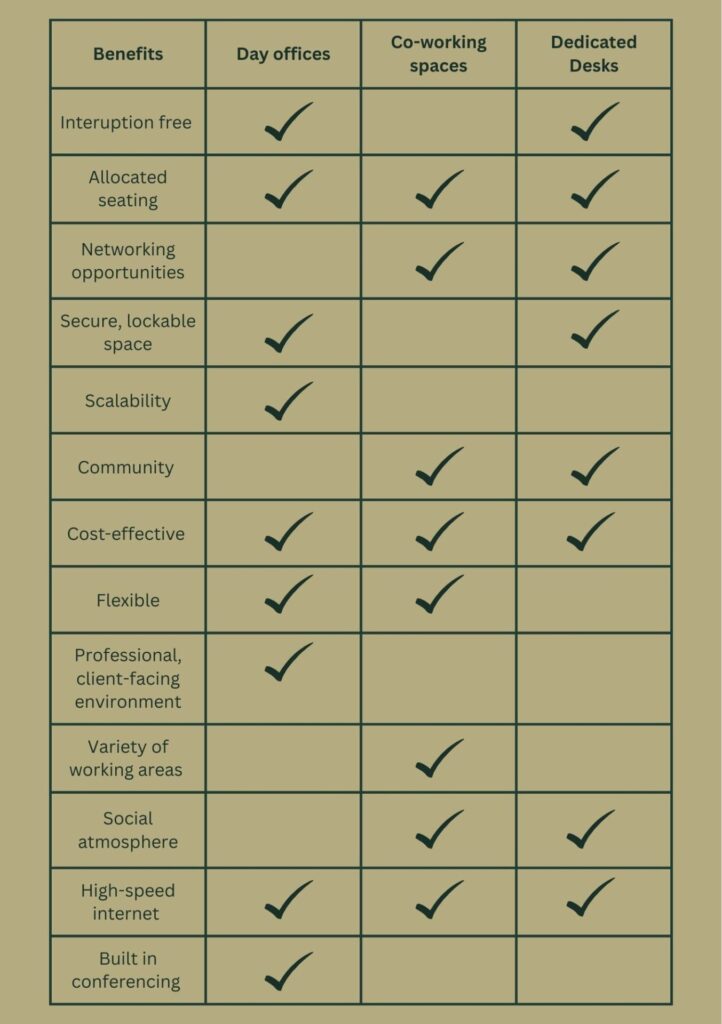
At WorkWell, we offer three types of workspace solutions: day offices, co-working spaces, and dedicated desks.

Day-offices, dedicated desks and co-working spaces are professional serviced environments, which operate uniquely, offering different types of office spaces for various working needs.

 Co-working spaces, often referred to as hot-desking, are open-plan offices allocated for businesses to work within. This style of working allows businesses to work alongside others, network and reap the benefits of a professional space at a fraction of the cost.

Day offices, on the other hand, are private office spaces that are available for short-term rental.  These rooms offer a private, dedicated space for businesses to operate within without distraction.

Private space

Dedicated desks combine elements from both types of workspaces, typically accommodating individuals and smaller teams in a shared-private office. An ideal choice for those wanting a fixed desk in an office environment, whilst creating a sense of community that co-working offers.

When a day office is the practical option

Day offices are ideal for teams that need to get together temporarily. Unlike a meeting room, this space is set up with workstations to plug and play. An ideal solution for hybrid and project-based teams looking for a short-term base.

Ergonomic furniture and smart storage solutions in our clean and well-designed offices are designed for productive and efficient working. Built-in conferencing capabilities remove the hassle of bringing your own equipment, perfect for a fast setup.

Our spaces are secure, which means our returning members can rest assured knowing any items kept within their day office remain safe. Each space blends comfort with convenience, promoting efficiency and productivity, tangible results and a real-time impact on the quality of output from a business.

When a co-working space is the most suitable option

Co-working is a fantastic option for entrepreneurs, businesses and freelancers seeking a tidy, nice, professional working environment, with opportunities to network and connect with other people.

Our co-working settings are perfect for those wanting an office-like environment. The ability to use the space as and when needed makes it ideal for those who adopt hybrid-work models or part-time office workers.

Our co-working spaces have numerous allocated seats, which may be acquired by various teams, which means our members will likely have the opportunity to meet other co-working members. We promote a collaborative atmosphere, increasing the chance for individuals to connect with other professionals.

When a dedicated desk is the ideal solution

Dedicated desk strikes a balance between the benefits of co-working and day offices, allowing small teams to have a dedicated space within a private office made up of other businesses.

This model of work allows our dedicated desk members to enjoy the privacy of an office, whilst still having the opportunity to network with other members. This is an effective long-term solution for those who only need one or two desks rather than a full private office.

Ready to find the right fit?

If youโ€™re exploring the flexibility of a co-working space, the consistency of a dedicated desk, or a short-term base from a day office, contact us, and weโ€™d be happy to discuss your business needs. We can help you explore the most practical office, as well as provide a tour of the facilities upon request.

Offices must be designed to support productivity

As hybrid work and flexible arrangements reshape the workforce, office spaces must evolve to remain relevant and supportive of productivity.

The “Adapting Offices for the Future of Work” study from the University of Leeds provides valuable insights into why office design matters in todayโ€™s work environment. This blog will share its key findings and actionable strategies for companies looking to design offices that foster productivity, collaboration, and employee satisfaction.

The importance of the physical office.

While remote work has advantages, the research highlights the irreplaceable value of physical office space. Offices serve as an anchor for work, providing an environment conducive to focus, creativity, and connection. For many, being in the office offers mental separation between home and work life, which can enhance productivity.

The University of Leeds study confirmed that offices are central to employee interaction, well-being, and productivity. Employees benefit from direct engagement with colleagues, strengthening social bonds and fostering collaboration.

Time spent with coworkers positively impacts both individuals and organisations by improving morale, reducing isolation, and encouraging teamwork. This social dimension of work emphasises why physical offices must remain part of the modern workplace.

Flexible and hybrid spaces for a dynamic workforce.

With the rise of hybrid work, one-size-fits-all office designs are no longer viable. The modern office must accommodate a range of work styles and schedules. The University of Leeds research suggests that agile, activity-based workspaces are increasingly popular for supporting diverse needs. These spaces offer different setups for focused work, collaboration, and relaxation, enabling employees to choose environments that best suit their tasks.

A flexible office space can help employees feel supported and enhance productivity. Companies are now investing in technologies like hot-desking, booking systems, and reconfigurable furniture to make workplaces adaptable. Such adjustments allow offices to cater to varying attendance patterns while ensuring employees have access to essential resources when they are on-site.

Technology for productivity.

Modern offices need to support productivity through technology. From booking systems that make it easy to reserve workspaces to digital collaboration tools that facilitate remote-in-office communication, technology is key to creating efficient work environments. The Leeds study emphasises that successful hybrid work models depend on more than physical space; they require a robust socio-technical approach.

By incorporating tools like high-speed internet, interactive whiteboards, and virtual meeting rooms, offices can bridge the gap between remote and in-person teams. These technological enhancements support smoother workflows, enabling employees to collaborate without interruption. Investing in such tools helps ensure that time spent in the office is maximally productive and that remote team members remain connected.

Well-being through design.

According to the research, employee well-being has emerged as a top priority for companies, moving from fifth to third on the list of strategic issues for businesses. A well-designed office can promote well-being, which in turn drives productivity. Design elements such as natural lighting, ergonomic furniture, and open layouts contribute to a healthier work environment, reducing stress and enhancing focus.

Collaborative spaces are particularly beneficial for well-being, allowing for social interaction and teamwork. These spaces can range from lounge areas to break rooms or spaces that encourage relaxation and informal conversation. By incorporating elements that prioritise wellness, companies can foster a work environment that attracts and retains talent while supporting productivity.

Tailoring office design.

The Leeds study underscores that no single office layout will meet all companiesโ€™ or individuals’ needs. Organisations should assess their specific requirements when planning office space. Some businesses may benefit from open spaces for team brainstorming, while others may need quiet zones for focused work. Flexibility is vital, as employee preferences and business demands may change.

An adaptable office design aligns with the evolving nature of work, enabling organisations to respond to future changes effectively. By continuously evaluating and updating their workspaces, companies can ensure they remain relevant and supportive of productivity for years to come.

Conclusion

The office remains vital to the modern work experience, supporting productivity through purposeful design, technological integration, and well-being-focused elements. These values underpin the approach at WorkWell offices and help ensure that our member retention is among the best in the industry.

As companies navigate the complexities of hybrid work, investing in flexible, adaptable office spaces can yield significant benefits for employee satisfaction and organisational success. By creating offices prioritising these factors, businesses can better equip themselves for a productive and resilient future.

10 benefits of Co-working Spaces

Co-working is revolutionising the ways we work, with it being an advantageous style of work to adopt for professionals and businesses alike. The benefits offered by operating in a co-working space are in abundance, providing a cost-effective, flexible and collaborative space.

Whether youโ€™re looking for an affordable office set-up, a vibrant community or the opportunity to expand your professional network, co-working is a dynamic environment designed to support productivity and innovation.

Here are ten of the key benefits of choosing a co-working space:

  1. Become part of a community

Co-working spaces foster a sense of belonging by unifying individuals from differing industries. This sense of community can help individuals feel a connection in the workplace, bringing joy to their work life.

  • Opportunities to network

Exposure to a community increases networking opportunities exponentially. Community events at WorkWell encourage our members to build on their meaningful professional relationships and professional growth.

  • Access to easily collaborate

Similarly, to be able to network and feel a sense of community, a co-working space creates more opportunities for collaboration. This can apply both internally and internally. Whether it’s brainstorming as a team in the communal space, or teaming up with someone new.

  • A cost-effective office renting solution

Reduce the overall price of renting office space by merging all of the costs into one flat fee! This eliminates the fuss around paying lots of smaller bills, streamlining the payment process into one monthly bill. Additionally, it saves the time needed to set up and monitor finances by doing it all for you.

Rather than being trapped into the rigid 9/5 schedule, members can enjoy the freedom and autonomy to work where and when they want to. These spaces are designed to be accessed on a 24/7 basis, allowing people to create a schedule which fits their lifestyle.

  • Helps to inspire and boost creativity

The dynamic and open design of co-working spaces fosters creativity by providing an environment that is both comfortable and professional. Surrounded by innovation and collaboration, youโ€™ll find it easier to think outside of the box and stay motivated.

  • Access to essential amenities

Co-working is all about making work easier and better for the individual, and the immediate ability to access amenities does just that! Whether itโ€™s hopping onto a solid Wi-Fi, or enjoying a cup of tea, members can rest knowing they have easy access to take the stress out of your day and help you focus on what matters.

  • Provides a legitimate workspace โ€“ A professional address and environmentย 

Establishing credibility is critical in the business world of today, and a co-working space can be more than just a desk for a business. Itโ€™ll give businesses a physical professional address which has the option to hire meeting room space, making it easier to impress clients. Opening the door to registering on Google as a business aiding SEO effort.

  • Minimises isolation and loneliness

Those who are free-lance or self-employed will attest that it can get a little bit lonely, thatโ€™s where co-working spaces can help! Co-working spaces eliminate the problem by creating a community for members to become a part of, improving the well-being of individuals and making work both fulfilling and enjoyable.

  1. Creating work-life balance

Separating work and home life is essential for maintaining a healthy balance.  A co-working space in particular provides a professional environment outside of the home, separating the two and making it easier for people to make the distinction between work life and home life.

Here at WorkWell, we make achieving a work-life balance effortless. Whether itโ€™s setting up in a co-working space for the day at a dedicated zone, or making use of the Zoom pods โ€“ we make sure member have a space that caters to their needs.

If youโ€™re interested in setting yourself up in one of our fantastic co-working spaces in Leeds or Harrogate, donโ€™t hesitate to contact us.

5 signs you’re ready to leave the home office

A home office — no more getting up at 6 am, no more commuting, no more traffic jams, no more office politics.

It sounds ideal to most people, but after a while, things can start to change, and one realises that perhaps their having a home office is becoming less and less a good idea. Below are several signs that itโ€™s time to move on and change to a new office environment:

Youโ€™re afraid youโ€™re not making a good professional impression.

No matter how much you spruce up your home office, you still may feel uneasy or unprofessional inviting clients to your home to discuss work. Having a professional business address is an important step in building the confidence and success to expand and improve oneโ€™s company image.

Youโ€™re becoming less productive

In the beginning, you were so excited about being able to work in the relaxed atmosphere of your home; working from the sofa, having the stereo on, being free to take as few or as many breaks as you want. But there comes a time when things get too relaxed and you find yourself getting less and less done each day. This is the time to move on.

Youโ€™re feeling lonely

The idea of a quiet space for yourself to get work done sounded ideal initially. But as you get into it, you discover that there was a social aspect to an office that you now miss. Choosing a co-working serviced office space is a perfect remedy for this, as it gives you the chance to work alongside like-minded small business owners. Hey it might even allow you to do some networking.

You canโ€™t achieve a good work-life balance

One advantage of working in an office is that when you finish work, you leave the office behind and get some real downtime at home. When your home is your office, you can never get a real clean break from it, and sooner or later it will start to take over your life, and youโ€™ll find it harder and harder to relax at home.

Youโ€™re ready to hire

Business is booming and you need to take on staff to help out. You could allow them to work from their own homes, but in fact working in an office with them allows you to train them more efficiently and build up a closer working relationship. An office space with more people in also becomes a stronger ideas zone.

Are you currently working from home? Perhaps youโ€™re already experiencing some or all of the above. Let us know your experiences and perhaps WorkWell can offer the solution you need.

Questions to ask before you begin co-working : What exactly do I get?!

Hot desking FAQs: What exactly is included?

Youโ€™ve heard of it, your friends are enthusiastically raving about it, you fancy trying it but youโ€™re unsure what exactly co-working  and hot-desking are. Put simply, it is a style of work which involves working in a shared environment. The shared office space is typically an office which comprises of independent activity and unlike a โ€˜conventionalโ€™ office, those working are not typically employed by the same organisation.

Okay, so you get the general gist of this modern working phenomenon, but you want to know what exactly is involved when you settle down to work.

Fortunately help is at hand. In order for you to comprehensively understanding what flexible office space entails take a look at our following guide to what exactly is included when you take the plunge into the increasingly popular world of co-working.

A desk

The most basic element of a hot-desking package includes the member getting his or her own desk. As Forbes writes: โ€œPeople donโ€™t want to work in tiny cubicles anymore.โ€

Instead of jostling for room in a coffee shop, co-workers get their own workstation that gives them ample room to spread out and make the most of their individual working space.

Office furniture

Of course, you canโ€™t have a desk without a chair to sit on! Co-working centres do, of course, provide members with a chair. Unlike many โ€˜conventionalโ€™ offices, which are not well known for providing employees with the most comfortable of furniture, many of the higher-end co-working centres, such as WorkWell, stock only the highest quality of office furniture.

The Internet

The internet has single-handedly provided people with new ways of working. With the World Wide Web spurning remote working initiatives and improved access to business applications, it stands to reason that the internet is an imperative feature of co-working offices.

For the remote worker, having access to quick Wi-Fi can make their working day considerably more productive. Consequently, co-working centres make ultra-rapid Wi-Fi an inherent part of their co-working packages.

On-site IT support

When you are working independently, if you are not what youโ€™d consider to be something of an IT whizz, a breakdown in telecommunication can be catastrophic. This is when co-working centres, which have IT support at the ready, can prove invaluable.

Aside from ultra-quick Wi-Fi, many of the higher-quality co-working centres, such as  WorkWell, include onsite IT support. If your equipment or data fails you, all is not necessarily lost.

As Liz Elam, founder of LinkCoworking, told Forbes:

โ€œEntrepreneurs who are trying to work out of their home struggle with isolation. Co-working allows them to have a built-in support system โ€“ and that in itself is priceless.โ€

Refreshments

How many times have you gone downstairs to make a much-needed cup of tea when working from home, only to find there are no teabags left! As the Huffington Post writes, having a constant flow of information can make you understandably agitated. Workers are encouraged to take regular breaks away from their computers in order to reduce stress levels and improve productivity.

In fact, apps are now even available, such as Google Chromeโ€™s Take A Break, in which a small icon flashes every 15 minutes as a reminder for you to stop surfing and go and have a drink.

Though we have to admit, going to make a drink only to find there is no tea or coffee available will not do our anxiety levels any favours.

In shared offices, this less than favourable scenario is unlikely to occur. As the likes of WorkWell co-working offices always have a well-stocked kitchen. At WorkWell you can even forget about cheap instant coffee as our co-workers have the luxury of being able to have as much freshly brewed coffee as they want in a day!

Temperature control

There have been numerous studies carried out to determine the impact the air temperature of an office has on employee productivity. It is widely agreed that an optimal office temperature should be between 21 and 23 degrees Celsius.

Regulating the temperature in a homeworking environment so that itโ€™s warm in the winter and cool in the summer can cost an independent worker a significant sum each year. Most co-working centres include total temperature control, meaning you can enjoy working in the ideal temperature all year round.

And the extrasโ€ฆ

Phones

For an additional cost that is not included in the co-working membership packages, co-workers can have their own phone line. Some co-working centres will provide a landline number for your business. This number can be forwarded to your mobile number of to a personalised voicemail.

Meeting rooms

As home offices and coffee shops rarely have enough space to swing a cat let alone invite clients, colleagues or potential clients over for a meeting, many remote working set-ups lack the โ€˜professionalismโ€™ of an office.

This is where co-working offices can help give you and your business a professional edge. For an additional cost, co-workers can book to use a comfortable meeting room which includes all the latest presentation and conferencing facilities.

When you consider youโ€™ll have access to ultra-rapid Wi-Fi, a built-in support system, top-quality office furniture, year-round temperature control, a potential landline number and a well-facilitated meeting room at your disposal, co-working in Leeds memberships can be a cost-effective way to give your business a boost in the right direction.

Want to try coworking in Leeds or Harrogate? Let us know! Get in touch with me and try us for a week.