Innovative furnishings: enhancing your business environment and output

When creating or picking out your office environment, it’s clear that a one-size-fits-all approach rarely works. Actually, having various thoughtful amenities for yourself and staff to utilise can enhance productivity, increase motivation and create a working environment conducive to success.

Consider, for instance, the impact of ergonomic and purpose-driven furniture. Whether it’s a supportive chair, an adjustable standing desk, or specialised sound-proofed pods, perfect for privacy and productivity. Integrating the right furnishings can transform the space into an inspiring and desirable work environment.

Furniture for employee-centric work environments

Zoom Pods (Solo Pods)  

Zoom or solo pods are sound-insulated booths which provide an enclosed space with a seat and desk. Solo pods provide a quiet space for staff to work independently or to utilise for privacy on professional calls. This style of furnishing is fantastic for open-plan offices, providing a modern solution to distractions in the workplace.

Desk Exercise Apparatus

To combat the effects of a sedentary workday, consider under-desk or desktop fitness equipment. The additions to stay active whilst working, ensuring both a healthy body and mental alertness for employees.

Ergonomic Furniture

Ergonomic furnishings are designed to fit the natural configuration of the body; they are designed to play on these comfortable positionings in order to prevent strains. A great example of ergonomic furniture includes standing desks, which allow a person to oscillate between being seated and standing, encouraging circulation and energy levels.

Quiet environments & collaborative zones

Beyond the solo pods, you can work to create quieter environments with breakout rooms and soundproofed seated booths. These dedicated zones introduce variety into the workday, which allows a team to convene in a private and calm space which can spark creativity and encourage collaboration.

Considerations to make

When considering the best way to set up or select an office, consider different aspects of the working environment. Spotting an inefficient office environment pre-emptively allows you to tailor and adjust the space to suit the varying needs of your business.

  • Comfort
  • Organisation
  • Acoustics
  • Aesthetic
  • Lighting
  • Space
  • Flexibility

Striking a balance between these different aspects of the environment allows you to craft an environment that works for you. By proactively addressing inefficiencies and aligning your environment with your goals, you produce a space that drives promising outcomes.

An office that has been properly conceptualised and designed fosters inspiration, motivation and most importantly, a sense of belonging. When staff feel valued and comfortable in their work environment, it reflects in the quality of their work and overall engagement.

Nature in design: influencing and enhancing office life

Should I use plants in my office?

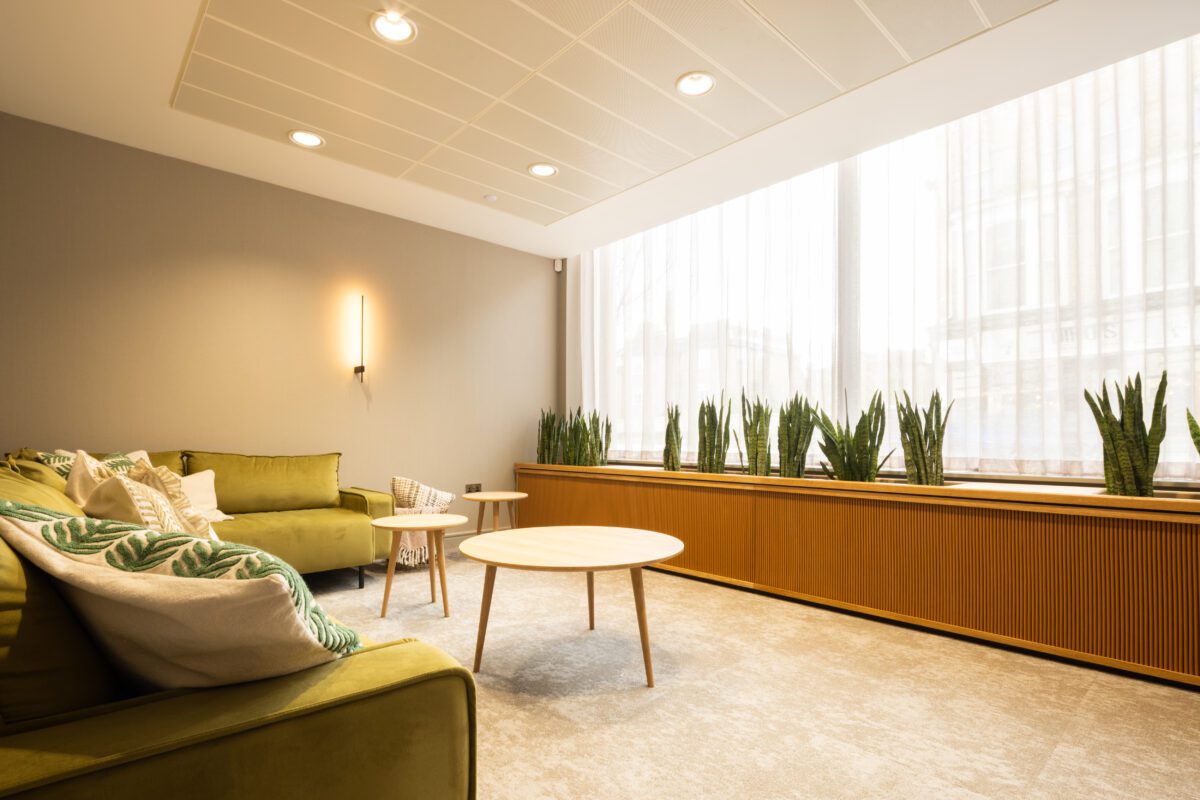
Introducing plants into your office design is a fantastic way to enhance the space. Not only do they offer a range of benefits, but they also bring a natural beauty that can elevate even the dullest work environment. We utilise plants in our communal spaces to offer additional energy and colour to the space. Here are just a few proven advantages that plants can offer:

Certain plants can improve the air quality within the space –

Plants, like trees, have the capability of removing carbon dioxide from the atmosphere. Certain plants are known to be great at stripping the air of toxins; these include:

  • Peace Lily’s
  • Aloe Vera plants
  • Spider plants
  • Rubber plants

Plants can elevate the appearance of a space –

Life and vibrancy can be brought into otherwise sterile office spaces through the use of plants. Their rich greens and occasional floral bursts add a pop of colour, making them excellent decorative elements for grey or white work environments. As an added bonus, some plants can introduce fresh, natural scents—just be mindful of any allergy sensitivities among your team.

Improving staff mental health with green hues –

Improving mental health via plants has been a topic of contention for a while, with many studies being conducted around the concept. It has since been proven that exposure to green environments can help reduce stress and improve the mood of individuals.

Plants help us feel connected to nature and can, therefore, transport us mentally outside of the office environment into a space that is beneficial to our mental health. Taking care of live plants allows us to offload some of the stressors whilst boosting our physical

Increasing productivity and creativity that is felt within the space –

The mental health benefits of plants extend naturally into enhanced productivity and creativity. When we feel better, we think better. A well-placed plant can help create a more inspiring and motivating workspace that encourages fresh thinking and higher engagement.

The best placements for your office plants

This is a given, but make sure your live plants have access to plenty of sunlight; positioning them by a window will ensure they’re able to grow and that they thrive. Consider placing plants on desks that have plenty of light reaching them, this ensures they won’t die and counteract all the benefits provided.

Faux plants offer a slight bit more flexibility, with the ability to be placed in the darkest corner of the room without dying. Just remember, these false plants will need to be dusted and will not need to be watered.

Greenery – whether it’s real or artificial – can be simple yet effective at introducing warmth and life into your workspace. For those who’d like to include living plants but worry about upkeep, we also offer a maintenance option to keep them and your space thriving.

A holistic approach to wellbeing will boost workplace productivity.

The link between employee wellbeing and workplace productivity is becoming clearer, backed by a growing and robust body of research.

Holistic View

Employers are moving beyond surface-level perks and beginning to take a more holistic view of staff wellbeing. It means acknowledging the full range of factors that contribute to how people feel at work, including occupational, emotional, social, intellectual, and environmental factors. As the evidence builds, the case for embedding wellbeing into business strategy is no longer simply a moral one. It is now a clear business priority.

Impact On Productivity

One of the strongest pieces of evidence comes from a six-month study at British Telecom (BT), which tracked nearly 1,800 call centre workers. The research found that a one-point increase in self-reported happiness on a ten-point scale led to a 12% rise in productivity. For more complex tasks, productivity gains reached 20%. This real-world data underlines how an employee feels significantly affect how well they perform.

These findings are supported by a broader meta-analysis of 339 independent studies, which cover over 1.8 million employees. It showed a consistent positive correlation between employee satisfaction and both productivity and customer loyalty. Higher levels of wellbeing were also linked to lower staff turnover, indicating that businesses supporting employee wellbeing tend to perform better overall.

UK-based surveys add weight to this. Around 80% of employees say they are more productive when they feel healthy and happy. Those who describe themselves as happy at work are nearly three times more likely to rate their performance as ‘very productive’ than those who are not. While self-reported, these insights align with objective productivity measures and point to the central role of emotional wellbeing in daily work.

Boosting Engagement

According to the World Health Organisation, companies that invest in effective health and wellbeing programmes can achieve productivity gains of up to 20%. These initiatives often include mental health support, flexible work arrangements, and opportunities for social connection – all of which contribute to a healthier and more engaged workforce.

The relationship between wellbeing and productivity is complex, but several mechanisms are well understood. Good physical and emotional health reduces both absenteeism and presenteeism, where employees come to work despite being unwell, often leading to underperformance. Mental health, in particular, has a substantial impact. Many employees who struggle with mental health issues do not disclose their condition, yet the effect on focus and output can be significant.

When staff feel psychologically supported, engagement and motivation tend to rise. This, in turn, drives efficiency, creativity and, ultimately, stronger organisational performance. Higher engagement also improves customer service and satisfaction, reinforcing the idea that wellbeing benefits both people and the business.

Workplace Design

Workplace design also plays a key role. Research from the University of Leeds shows that employee wellbeing has climbed the agenda in many organisations, rising from fifth to third among strategic priorities. Office design can influence wellbeing, and by extension, productivity, through elements such as natural lighting, ergonomic furniture and open layouts. A well-considered environment can reduce stress and support concentration.

Collaborative spaces are especially valuable, as they enable social interaction and informal exchange. These can range from lounge areas to quiet rooms or shared breakout spaces, all of which contribute to a more human and connected workplace. By incorporating these features, organisations can create spaces that support productivity and help attract and retain talent.

Flexible Space

The Leeds research also notes that there is no one-size-fits-all solution. Companies must assess their unique needs. WorkWell, for instance, helps businesses understand how to match their workspace with employee preferences and operational demands. Flexibility is key, allowing organisations to adapt as those needs evolve.

An adaptable office design supports this shift, enabling companies to remain responsive and forward-looking. Regularly reviewing and adjusting workspaces helps ensure they continue to meet both business and employee needs.

Ultimately, a sustained focus on wellbeing can foster a more resilient and sustainable workplace culture. Lower turnover, stronger commitment and increased loyalty all stem from treating people well. As more organisations embrace wellbeing in its fullest sense, they are finding that supporting people and driving performance go hand in hand.

Supporting staff with their work-life balance

In today’s evolving and hybrid workplace, supporting employees in achieving a healthy work-life balance cannot be overstated. As employers face growing demands for greater flexibility and well-being support, the challenge lies in designing environments that are not only productive but also sustainable for their people.

Flexible Working

Addressing this issue is not simply a moral imperative but a strategic one. According to a study by the CIPD, 71% of employees now consider flexible working essential when considering a new role. As a result, forward-thinking organisations are taking a fresh look at how work is done to meet these expectations while still delivering on business goals.

Flexible working arrangements are increasingly central to this approach. Offering employees the choice to work remotely, adopt flexible start and finish times, or explore compressed working weeks helps them better manage their responsibilities outside of work.

Research from the University of Warwick has shown that happy employees are up to 12% more productive, and flexibility plays a significant role in that happiness. Furthermore, companies that embrace flexible practices often see improvements in recruitment, retention, absenteeism, and financial performance.

Wellness

Alongside flexibility, the role of wellness programmes has grown significantly. Mental health support, access to counselling, and activities such as yoga or mindfulness sessions are now becoming workplace staples. These initiatives are not only beneficial for employees’ well-being but also for employers.

A 2022 Deloitte report found that poor mental health among employees costs UK employers up to £56 billion annually. Wellness programmes that tackle stress and promote better health can mitigate these losses, reducing burnout and fostering a more engaged workforce.

Technology

Technology is another essential tool in supporting balance. Time management applications, AI-powered automation and collaboration tools help employees streamline repetitive tasks, freeing up time for more meaningful work. Remote working technologies have also made it easier for staff to work flexibly, with a study by Owl Labs showing that 62% of employees felt more productive when working remotely.

The digital workplace must be carefully managed. Employers should communicate expectations around digital boundaries to ensure staff can genuinely switch off outside of working hours. Normalising ‘clocking off’ is vital to preventing digital burnout and protecting mental health.

Workplace Culture

Creating a supportive workplace culture remains one of the most enduring and effective strategies. Encouraging open dialogue, providing access to resources like employee assistance programmes, and showing genuine consideration for individual circumstances helps foster a sense of psychological safety and inclusion.

WorkWell Offices provides an example of how these principles can be embedded into the very infrastructure of a workplace. By designing flexible office spaces that prioritise wellness and collaboration, WorkWell also promotes an environment where employees can be both productive and comfortable. Their spaces include wellness rooms, breakout zones, ergonomic workstations, and onsite classes to improve mental and physical health. The holistic approach to workplace design reflects a broader commitment to supporting the well-being of the people who use their spaces, recognising that wellness is not a perk, but a necessity.

Finally, the importance of continuous review cannot be overlooked. Policies should be regularly assessed and adapted to employee feedback and changing societal norms. Recognition also plays a crucial role in reinforcing positive behaviours. Acknowledging teams or individuals who model good work-life balance sets a tone from the top that well-being matters.

Supporting employees to achieve a better balance is no longer a niche concern but a core business function. When organisations invest thoughtfully in flexible policies, workplace wellness, and inclusive cultures, they are investing in the resilience and future success of their workforce.

Customisation of office spaces: tailored to your team

At WorkWell, we understand that no two businesses are the same—nor are their workspace requirements. That’s why we specialise in providing flexible and adaptable office environments designed to evolve alongside your team.

With the ability to adjust layouts, modify furnishings, and create a workspace that truly works for your business, we give you the autonomy to shape your ideal office environment. At WorkWell, your office isn’t just a place to work—it’s a space built around your needs, growing and adapting with you.

The Power of Office Customisation (Benefits)

Creating a space that works for you is essential. A well-designed workspace enhances productivity by fostering an environment that inspires, attracts, and promotes happiness. These elements make day-to-day work more enjoyable and help create an appealing office atmosphere that people genuinely want to be in.

Key Considerations for Office Design

When planning your office setup, you need to consider both what you want and what you need. Key factors include the size of your team, the available office space, and the location.

Furnishings

Choosing the right furniture can be a challenge, but at WorkWell, we make it simple. You don’t need to worry about costs, assembly, or logistics—we handle everything, so you can move straight into your fully serviced office. We work closely with you to ensure your workspace is the perfect fit for your business.

Standard inclusions: Ergonomic chairs, desks, and storage solutions.

Customisable add-ons: Additional storage, greenery (both real and artificial), and brand manifestations—typically on windows, but other branded elements can be arranged upon request.

Layouts

The layout of your office is just as crucial as its size and location. Some layouts promote productivity, while others can hinder workflow. That’s why it’s important to consider how your business operates and what type of setup will best support your team.

During the setup process, we collaborate with you to discuss layout preferences, ensuring that your space is designed to meet your business requirements.

Office Space

Unlike most serviced office providers, we offer true flexibility when it comes to office space. Whether your team is growing or downsizing, we can adapt to your needs, allowing you to tailor your environment as your business evolves.

We also provide a variety of workspaces to support the dynamic needs of your team, including breakout areas, Zoom pods, co-working spaces, meeting rooms, and boardrooms. This flexibility ensures that your office remains functional and efficient, regardless of how your business changes.

Technology

Setting up an office from scratch can be time-consuming, especially when it comes to technology. That’s where we come in. We streamline the process by providing full tech support, eliminating the hassle of finding reliable internet providers, securing server space, or setting up phone systems.

Each of our meeting room spaces and Zoom pods is fitted with video conferencing capabilities, allowing members to host video-based meetings without needing to worry about setting up cameras or forgetting necessary connecting wires.

Additionally, we offer optional add-ons, such as call handling services, which can be particularly beneficial for business owners looking to optimise their time and resources. Another add-on we can provide is the inclusion of additional screens in an office.

Final Thoughts

Moving into a serviced office can offer your business all the benefits of a professional, ready-to-go workspace without the stress of setting everything up yourself. If you’d like to learn more about serviced offices at WorkWell, get in touch with our team—we’d be happy to discuss how we can support your business.

Offices must be designed to support productivity

As hybrid work and flexible arrangements reshape the workforce, office spaces must evolve to remain relevant and supportive of productivity.

The “Adapting Offices for the Future of Work” study from the University of Leeds provides valuable insights into why office design matters in today’s work environment. This blog will share its key findings and actionable strategies for companies looking to design offices that foster productivity, collaboration, and employee satisfaction.

The importance of the physical office.

While remote work has advantages, the research highlights the irreplaceable value of physical office space. Offices serve as an anchor for work, providing an environment conducive to focus, creativity, and connection. For many, being in the office offers mental separation between home and work life, which can enhance productivity.

The University of Leeds study confirmed that offices are central to employee interaction, well-being, and productivity. Employees benefit from direct engagement with colleagues, strengthening social bonds and fostering collaboration.

Time spent with coworkers positively impacts both individuals and organisations by improving morale, reducing isolation, and encouraging teamwork. This social dimension of work emphasises why physical offices must remain part of the modern workplace.

Flexible and hybrid spaces for a dynamic workforce.

With the rise of hybrid work, one-size-fits-all office designs are no longer viable. The modern office must accommodate a range of work styles and schedules. The University of Leeds research suggests that agile, activity-based workspaces are increasingly popular for supporting diverse needs. These spaces offer different setups for focused work, collaboration, and relaxation, enabling employees to choose environments that best suit their tasks.

A flexible office space can help employees feel supported and enhance productivity. Companies are now investing in technologies like hot-desking, booking systems, and reconfigurable furniture to make workplaces adaptable. Such adjustments allow offices to cater to varying attendance patterns while ensuring employees have access to essential resources when they are on-site.

Technology for productivity.

Modern offices need to support productivity through technology. From booking systems that make it easy to reserve workspaces to digital collaboration tools that facilitate remote-in-office communication, technology is key to creating efficient work environments. The Leeds study emphasises that successful hybrid work models depend on more than physical space; they require a robust socio-technical approach.

By incorporating tools like high-speed internet, interactive whiteboards, and virtual meeting rooms, offices can bridge the gap between remote and in-person teams. These technological enhancements support smoother workflows, enabling employees to collaborate without interruption. Investing in such tools helps ensure that time spent in the office is maximally productive and that remote team members remain connected.

Well-being through design.

According to the research, employee well-being has emerged as a top priority for companies, moving from fifth to third on the list of strategic issues for businesses. A well-designed office can promote well-being, which in turn drives productivity. Design elements such as natural lighting, ergonomic furniture, and open layouts contribute to a healthier work environment, reducing stress and enhancing focus.

Collaborative spaces are particularly beneficial for well-being, allowing for social interaction and teamwork. These spaces can range from lounge areas to break rooms or spaces that encourage relaxation and informal conversation. By incorporating elements that prioritise wellness, companies can foster a work environment that attracts and retains talent while supporting productivity.

Tailoring office design.

The Leeds study underscores that no single office layout will meet all companies’ or individuals’ needs. Organisations should assess their specific requirements when planning office space. Some businesses may benefit from open spaces for team brainstorming, while others may need quiet zones for focused work. Flexibility is vital, as employee preferences and business demands may change.

An adaptable office design aligns with the evolving nature of work, enabling organisations to respond to future changes effectively. By continuously evaluating and updating their workspaces, companies can ensure they remain relevant and supportive of productivity for years to come.

Conclusion

The office remains vital to the modern work experience, supporting productivity through purposeful design, technological integration, and well-being-focused elements. These values underpin the approach at WorkWell offices and help ensure that our member retention is among the best in the industry.

As companies navigate the complexities of hybrid work, investing in flexible, adaptable office spaces can yield significant benefits for employee satisfaction and organisational success. By creating offices prioritising these factors, businesses can better equip themselves for a productive and resilient future.

10 benefits of Co-working Spaces

Co-working is revolutionising the ways we work, with it being an advantageous style of work to adopt for professionals and businesses alike. The benefits offered by operating in a co-working space are in abundance, providing a cost-effective, flexible and collaborative space.

Whether you’re looking for an affordable office set-up, a vibrant community or the opportunity to expand your professional network, co-working is a dynamic environment designed to support productivity and innovation.

Here are ten of the key benefits of choosing a co-working space:

  1. Become part of a community

Co-working spaces foster a sense of belonging by unifying individuals from differing industries. This sense of community can help individuals feel a connection in the workplace, bringing joy to their work life.

  • Opportunities to network

Exposure to a community increases networking opportunities exponentially. Community events at WorkWell encourage our members to build on their meaningful professional relationships and professional growth.

  • Access to easily collaborate

Similarly, to be able to network and feel a sense of community, a co-working space creates more opportunities for collaboration. This can apply both internally and internally. Whether it’s brainstorming as a team in the communal space, or teaming up with someone new.

  • A cost-effective office renting solution

Reduce the overall price of renting office space by merging all of the costs into one flat fee! This eliminates the fuss around paying lots of smaller bills, streamlining the payment process into one monthly bill. Additionally, it saves the time needed to set up and monitor finances by doing it all for you.

Rather than being trapped into the rigid 9/5 schedule, members can enjoy the freedom and autonomy to work where and when they want to. These spaces are designed to be accessed on a 24/7 basis, allowing people to create a schedule which fits their lifestyle.

  • Helps to inspire and boost creativity

The dynamic and open design of co-working spaces fosters creativity by providing an environment that is both comfortable and professional. Surrounded by innovation and collaboration, you’ll find it easier to think outside of the box and stay motivated.

  • Access to essential amenities

Co-working is all about making work easier and better for the individual, and the immediate ability to access amenities does just that! Whether it’s hopping onto a solid Wi-Fi, or enjoying a cup of tea, members can rest knowing they have easy access to take the stress out of your day and help you focus on what matters.

  • Provides a legitimate workspace – A professional address and environment 

Establishing credibility is critical in the business world of today, and a co-working space can be more than just a desk for a business. It’ll give businesses a physical professional address which has the option to hire meeting room space, making it easier to impress clients. Opening the door to registering on Google as a business aiding SEO effort.

  • Minimises isolation and loneliness

Those who are free-lance or self-employed will attest that it can get a little bit lonely, that’s where co-working spaces can help! Co-working spaces eliminate the problem by creating a community for members to become a part of, improving the well-being of individuals and making work both fulfilling and enjoyable.

  1. Creating work-life balance

Separating work and home life is essential for maintaining a healthy balance.  A co-working space in particular provides a professional environment outside of the home, separating the two and making it easier for people to make the distinction between work life and home life.

Here at WorkWell, we make achieving a work-life balance effortless. Whether it’s setting up in a co-working space for the day at a dedicated zone, or making use of the Zoom pods – we make sure member have a space that caters to their needs.

If you’re interested in setting yourself up in one of our fantastic co-working spaces in Leeds or Harrogate, don’t hesitate to contact us.

Focusing on what matters: How a serviced office simplifies the admin workload

Getting your business set up and in the position to go can be challenging when there is a myriad of little details to consider in setting up an operational workspace.  From setting up the utilities to buying furniture, these tasks can be resource-intensive and time-consuming.

A serviced office takes care of the details, so you don’t have to. The process of transitioning into a serviced office is made seamless, with members simply needing to establish their contract before preparing to move in.

Reducing admin work

Maintenance

Maintenance often requires a considerable time investment, encompassing routine tasks such as cleaning, paying bills, and managing repairs. These ongoing administrative responsibilities can quickly add up, demanding regular attention each week to ensure the workspace remains functional and organised.

At Work Well, we offload these responsibilities from members, providing more time to critical business activities. Furthermore, because these issues are managed and resolved in-house, the time it takes is typically much faster than in a traditional office.

This means small but necessary chores like replacing lightbulbs and hiring electricians or plumbers aren’t a concern for members. Maintenance isn’t limited to how the space is cared for; we can also manage the logistics such as sourcing supplies or stocking the coffee and tea stations with fresh products. This can cut out some of the time spent preparing the logistics of a meeting, allowing for more time to be given to prepping for the meeting’s content strategy rather than concerning themselves around the minutiae of hosting one.

Our serviced offices are thoughtfully designed and well-maintained, creating a professional environment that fosters productivity and enhances workflow.

Meetings

Meetings hosted in traditional offices often come with significant costs and logistical headaches, a serviced office removes these barriers by providing access to fully equipped meeting room spaces at a fraction of the cost of renting a private office with a dedicated meeting room. More so, having access to meeting rooms within the same working location can make coordinating meetings quick and easy for a business.

Our meeting room spaces are equipped with state-of-the-art technology, giving members access to a meeting room kitted out with the latest technologies to aid in presenting.

Members can liaise to coordinate catering, making the process of hosting meetings even simpler. With WorkWell handling the logistics like placing food orders, collecting and setting up the catering.

Packaged utilities

A serviced office has the utilities set up and ready to use, so businesses can begin operating without delays.  Instead of individually setting up and paying for each utility, whether that’s water, electricity, or wi-fi, a serviced office cuts out all of the set-up process. 

Not only does this reduce the time spent getting a business prepared to launch, but it also takes out the fuss of individual billing by merging all the costs of utilities and rent into one price making it simple to track expenses. This means that a serviced office is accessible with a turnkey solution, in contrast to traditional offices which can be subject to time delays, postponing the date a business can become operational.

Core handling

WorkWell goes beyond a physical space for your business to reside, we can provide front-of-house support with a reception team who can answer calls, greet visitors and manage any inquiries on behalf of your business.

Additionally, the front of house staff can take any mail or deliveries on behalf of a company, which is convenient and particularly useful for keeping organised.

A serviced office can simplify the burdens that a traditional office has, which can provide the necessary time and effort to grow and improve businesses. With the additional time and resources, a business can focus on the efficiency of its workforce.

Why prioritise employee well-being?

In today’s fast-paced business world, the office is no longer just a place to get work done—it’s where innovation is sparked, relationships are cultivated, and dreams are turned into reality.

A well-designed workspace goes beyond aesthetics and becomes a powerful tool for enhancing employee well-being, driving productivity, and ultimately contributing to organisational success. Research continues to show the profound impact of workspace design on performance. When employees work in thoughtfully planned environments, their productivity can soar by as much as 20%.

Man On Phone In Pod

The secret lies in the details—spaces that adapt to the needs of diverse teams, ergonomic furniture that ensures comfort and reduces physical strain, and layouts that balance collaboration with the ability to focus. Natural light plays a pivotal role in improving mood, boosting energy, and even leading to better sleep, which can enhance performance throughout the workday.

At the heart of this transformation is the concept of employee well-being. A workspace designed with well-being in mind has the power to transform the way people feel about their work and their place within an organisation. Natural elements like plants and organic textures create a calming atmosphere, reducing stress and unlocking creativity. Clean, fresh air not only supports cognitive function but also sends a clear message to employees that their health and comfort matter.

When organisations prioritise these elements, they see real results—lower absenteeism, higher engagement, and an overall sense of satisfaction that drives teams to new heights.

In today’s competitive job market, a thoughtfully designed office is also a magnet for talent. More than ever, employees are looking for workplaces that reflect their values and provide environments where they can thrive. Research shows that nearly 80% of employees consider workplace design when deciding whether to accept a job offer or stay with their current employer. The message is clear: when organisations invest in their spaces, they invest in their people. This helps attract top talent and fosters loyalty among existing employees, reducing turnover and building stronger teams.

Open Coworking Space Designed For Well-being

“A workspace that prioritises well-being sends a strong message that the organisation cares—not just about results, but about the people driving them.” – Dr. Christina Maslach, a renowned workplace expert

Beyond retaining talent, inspiring office spaces have the potential to drive motivation and engagement. When employees step into a workspace that feels comfortable, functional, and beautiful, they’re reminded of their value to the organisation. These environments aren’t just about physical comfort; they spark creativity, support mental well-being, and cultivate a sense of belonging. A space that reflects care and thoughtfulness can make employees feel proud of where they work, enhancing their connection to the company’s mission and goals.

For businesses, the benefits of creating a well-designed workspace are clear. Organisations that embrace these principles experience a surge in productivity and engagement. The investment in features like ergonomic furniture, biophilic design, and advanced ventilation systems pays off in measurable ways—from reduced absenteeism to increased creativity and focus. Moreover, the positive energy generated in these environments often spills over into team dynamics, improving collaboration and fostering innovation.

Ultimately, the physical workspace serves as a reflection of an organisation’s values. It signals to employees that their health, happiness, and success are priorities. This isn’t just about meeting the demands of a trend—it’s about creating a culture where people feel empowered and inspired to do their best work. As Dr. Christina Maslach, a renowned workplace expert, says, “A workspace that prioritises well-being sends a strong message that the organisation cares—not just about results, but about the people driving them.”

For companies looking to stand out in an increasingly competitive world, transforming the office into a space that promotes well-being, and success is no longer optional—it’s essential. By creating workplaces that inspire, comfort, and energise, organisations set the stage for their teams to thrive, paving the way for long-term growth and innovation.

Are you ready to reimagine your workspace? Let’s collaborate to create an environment where well-being and productivity flow seamlessly to empower your team.