To Lease or not to Lease: Do Serviced Offices stand a chance?!

 “Sign here on the dotted line, please, Sir?” To which the company director fervently signs, ecstatic that he has finally got proper business premises and his company really is going places!

Business might be booming at the moment, and with profit signs clocking up, you might feel compelled to lease out a bricks and mortar office to develop your business further.

But how do you know your business will maintain such growth and be able to continue paying hefty office lease costs in 12, 18 or 24 months?

In short, would you be better off renting a serviced office rather than taking the plunge and committing to leased office space for the foreseeable future?

Commitment to continue paying for the property

According to the former Dragons’ Den star Theo Paphitis, “50% of all small businesses fail in the first couple of years.”

It is a startling statistic and one of the key reasons people take serviced office space.

When deliberating whether you should opt for leased or serviced office space, you should ask yourself this question: “Where will your business be in five years?”

If you can’t answer this question but take out a leased space anyway, you are, by all intents and purposes, merely guessing. And guesswork rarely works well in business. You are likely to be simply making do with what you need now and putting up with it in the future, or you are taking out more space than you need now in the hope that your business will grow in the future. If your business does develop, fantastic. However, as we can see from Theo Paphitis’ startling statistic, there is a real chance/concern that it won’t grow, and the office lease will be a waste of money. Even if your business does grow, there is the chance that a leased office would be wasted capacity while you grow.

Think long and hard about where your company will be in five years before you sign up for a lengthy lease contract.

A serviced office solution

With serviced office space, the commitment is much shorter, meaning you would only need to finish a 12-month contract. Consequently, if you found yourself in the unfortunate position that your business was no longer viable, you could walk away from the office once the 12-month contract terminated. More often than not, if you went to the provider, this duration could be shortened, as, without wanting an empty space in the office, the serviced office provider would help find a solution.

And then there’s the staff.

An office doesn’t look too professional if there is no receptionist in the foyer to meet and greet clients, potential clients, employees and other visitors.

If you lease an office, you will, in general, be required to budget for a receptionist and other key members of staff required to ensure a professional office environment is maintained.

As most 4 – 8 person teams don’t require a full-time receptionist, what’s the point in paying a ‘9 – 5’ when in a serviced office you get a ‘share’ of the team?

IT staff, for example, are essential members of the office community. Imagine the embarrassment of having an unexpected and sudden IT failure in the middle of a vital client presentation and being void of the skills and knowledge of how to rectify the problem?

Yes, it’s safe to say IT staff are vital for the smooth running of an office and don’t come without a price tag.

Whilst with leased offices you will need to hire crucial employees such as reception staff and IT professionals, with many serviced offices, they are included in the package.

For example, here at  WorkWell, our serviced offices include onsite IT support, meaning you don’t have to dedicate valuable time, money and resources sourcing your IT staff.

Other office essentials

When you lease an office, you typically get the office shell and little more besides. Furniture, Wi-Fi connections, telephones and other features such as temperature control will all have to be installed to your requirements.

What’s more, it is not uncommon to be in a leased office in which the AC or another essential office feature is broken because “Nobody knows how to fix it.”

In a serviced office, it is the provider’s job to repair any breakages and keep all features well-maintained and in good working order.

With a serviced office, such office essentials are already there waiting for you, which can save you considerable amounts of time. From a 10 to 100-person office, all aspects need to be considered, meaning setting up an office is a huge project. By contrast, with a serviced office you simply show up with your own devices, your team and perhaps and sandwich or two and instead of waiting for weeks on end for the communications to be connected, office furniture to arrive, not to mention coffee machines and fridges to be installed, you will be able to start working and earning money the day you move in.

Consider maintenance costs

Offices do, of course, need to be kept clean. Their grounds need to be maintained, as does the outside of the office, after all, how professional or inspiring would a company look like if its premises comprised of peeling paint, a weed-infested garden and litter bins bursting at the seams?

In short, maintaining a clean, welcoming and inviting office again takes time, money and resources, and are you sure your business has access to such funds?

And then there’s the unexpected costs. A good way to exemplify this point is the fact that last year, Carrwood Park’s server room AC broke and cost £15,000 to repair. Whether it’s faulty ACs or a leaky roof, you have to ask yourself, how many SMEs have access to £15,000 at the drop of a hat?

So what about the price?

Of course, the cost of leased offices varies considerably, as does serviced offices. The main influencing factor which contributes to the cost of any office space is the location. For example, an office in London will be significantly pricier to rent than an office in Hull or Leeds.

You might find that a serviced office costs more per square foot than a leased office. However, you take much less of it and share communal space and resources. Combine this with the fact that you will have access to enterprise-scale infrastructure and have potential issues such as breakages and repairs dealt with, you will find that you may have less space, but the space you do have enables you to work more efficiently and focus on what earns you money.

Once you factor these points in, then serviced offices are so much better value. In addition, because you share a lot of the resources, the actual price is much cheaper than what it would cost for the same services and resources when leasing an office.

For quality, stylish, practical and convenient serviced offices on the outskirts of Leeds, get in touch with WorkWell.

How to size your office

If your company is making the leap and leasing new office space, you have a very important decision to make. How much space do you need? Choosing the right size is crucial for several reasons:

  • Comfort and morale of your employees
  • Legal regulations – are you allowing the right amount of space per person?
  • Practical and productive functioning of the office
  • Cost – are you paying too much for space you just don’t need, or could access to more space be one of the hidden charges of leasing a serviced office?
  • Growth – does the space you have allow for the future growth of the business, or would you prefer to jump to a larger serviced office as and when you need to?

What is the legal requirement for office size?

The crucial thing to consider when working out how much office space you need is the Health and Safety Executive’s guidance on the issue. HSE regulations insist that workrooms have enough space available for people to move within the room and between workstations with ease. When the room is empty, the total volume of the space, when divided by the number of people working in it, should be at least approximately 53.2 square feet.

At dedicated meeting and office spaces like WorkWell, the operating rule of thumb is to leave 60 to 70 square feet of space per person. However, this is dependent on the room size, shape and the furniture and equipment in the space. As a rough guide, a 2-person office requires around 85 square feet per person, whilst a 40-person office will need between 45 and 50 square feet.

Don’t forget about the furniture.

When working out how much space per person you need to allow in your new serviced office, you need to take furniture and equipment out of the equation. These are obstacles that take up a person’s space and restrict movement, so you shouldn’t include these when trying to work out the square feet of a room, for example.

What does your business need?

It’s important to know about the minimum requirement of space per person in offices, but you should only use this as rough guidance and tailor the actual office size to the needs of your business. If you want your team to be comfortable, productive and happy, you should always leave more space than the minimum required.

As we note in our Serviced Office Size Guide, in business, common sense prevails, and the amount of space and equipment an employee will require is intrinsically dependent on what their job is and the type of business you operate. For example, an office for a telephone-based business like a call centre is likely to need less space than another type of company, such as a printing firm.

As our ‘Choosing the right size for your serviced office’ document states, a marketing business or print agency of approximately four employees should ideally have an office of about 280 square feet in size.

By comparison, a procurement agency of around 90 employees would require an office of approximately 7,500 square feet.

A medium-sized agency, like a procurement firm, typically spends a lot of time in the office. Working on the sum that the firm has 90 employees, a business like this would require 95 desks, five meeting rooms and one management office.

Making the best use of office space

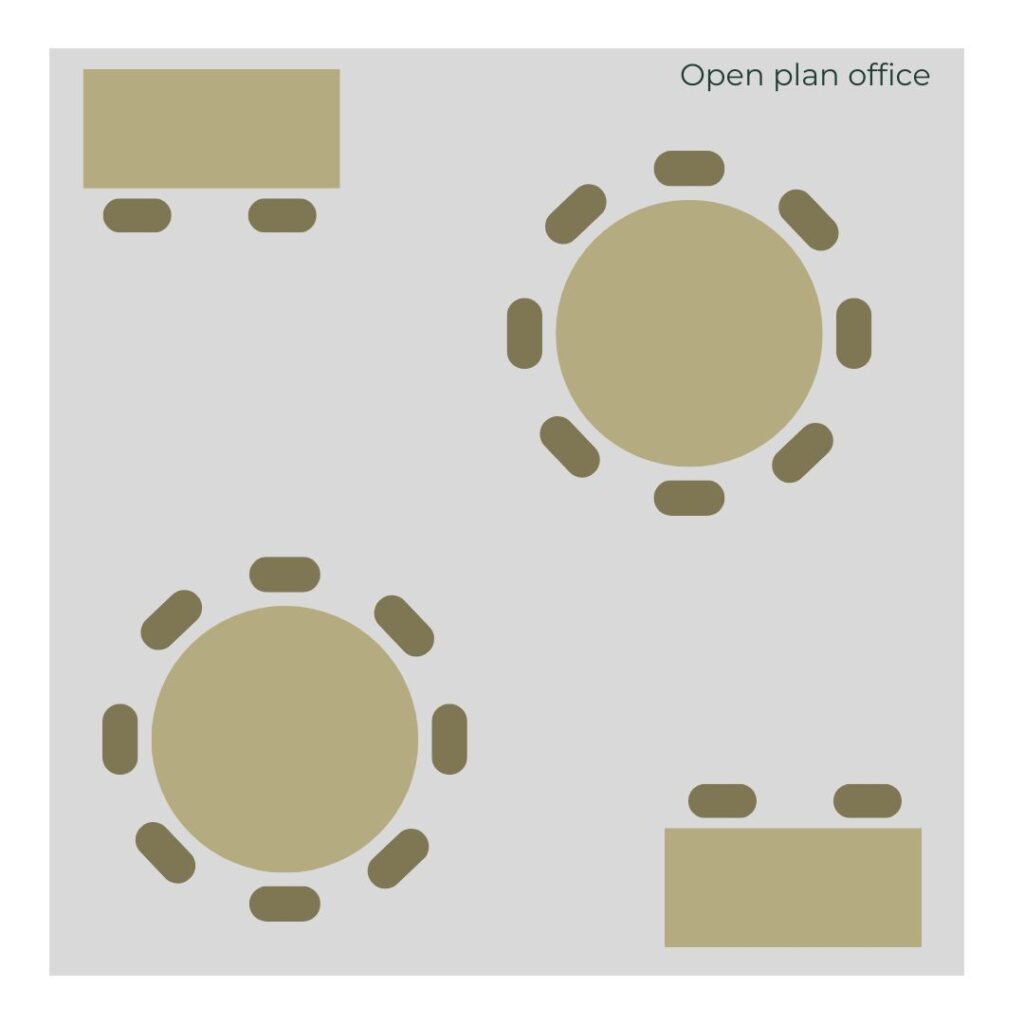
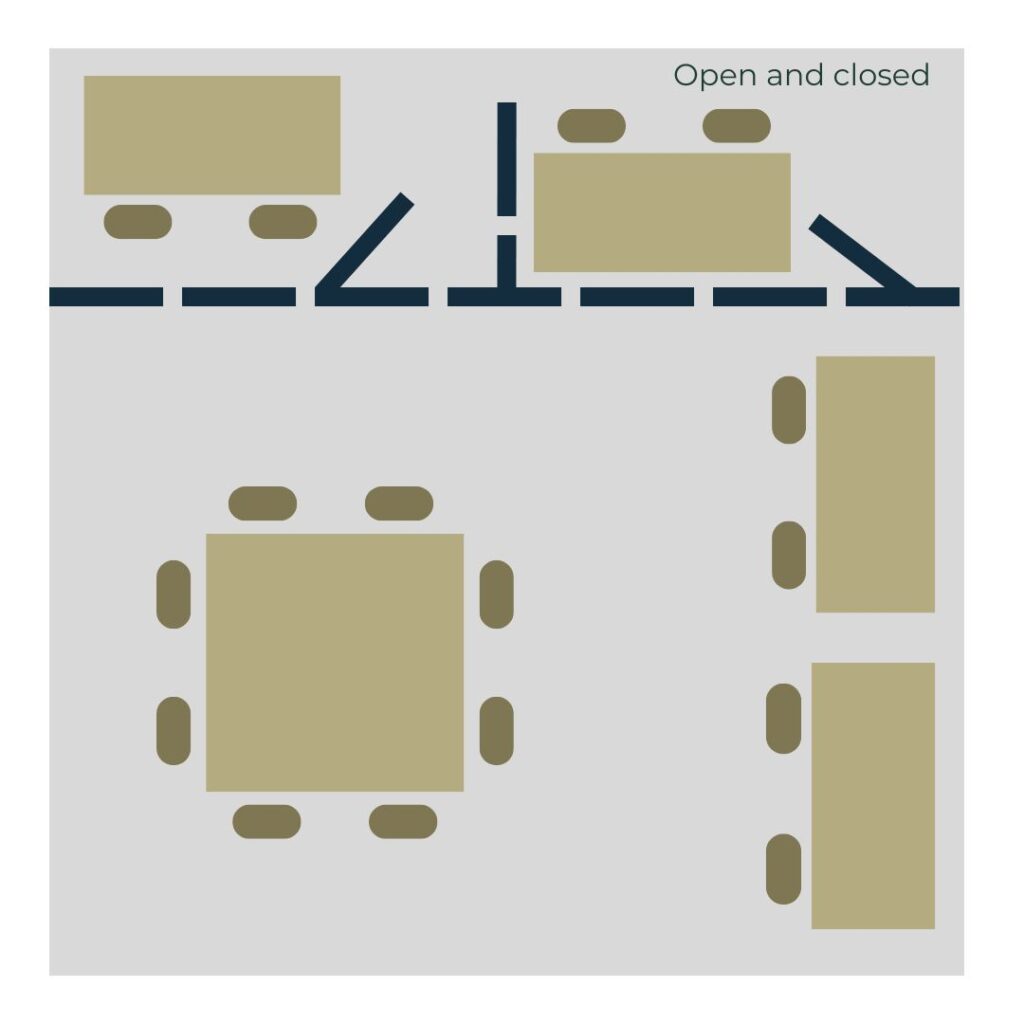
Of course, it’s not just the actual space you have that matters in an office, but what you do with it. As we mentioned in an earlier blog, there are ways of setting up an office to maximise productivity, but also to ensure that all workers are comfortable and have pleasant surroundings to work in. The right layout can ensure a good ‘flow’ through the workspace, with all essential equipment within easy reach and the layout as a whole making logical and practical sense. Here are a few tips on efficient office layout to get you started:

  • Let in plenty of daylight
  • Keep the space well-ventilated
  • Create zones – for example, one zone for computer work and another for informal meetings, collaborative work and breaks
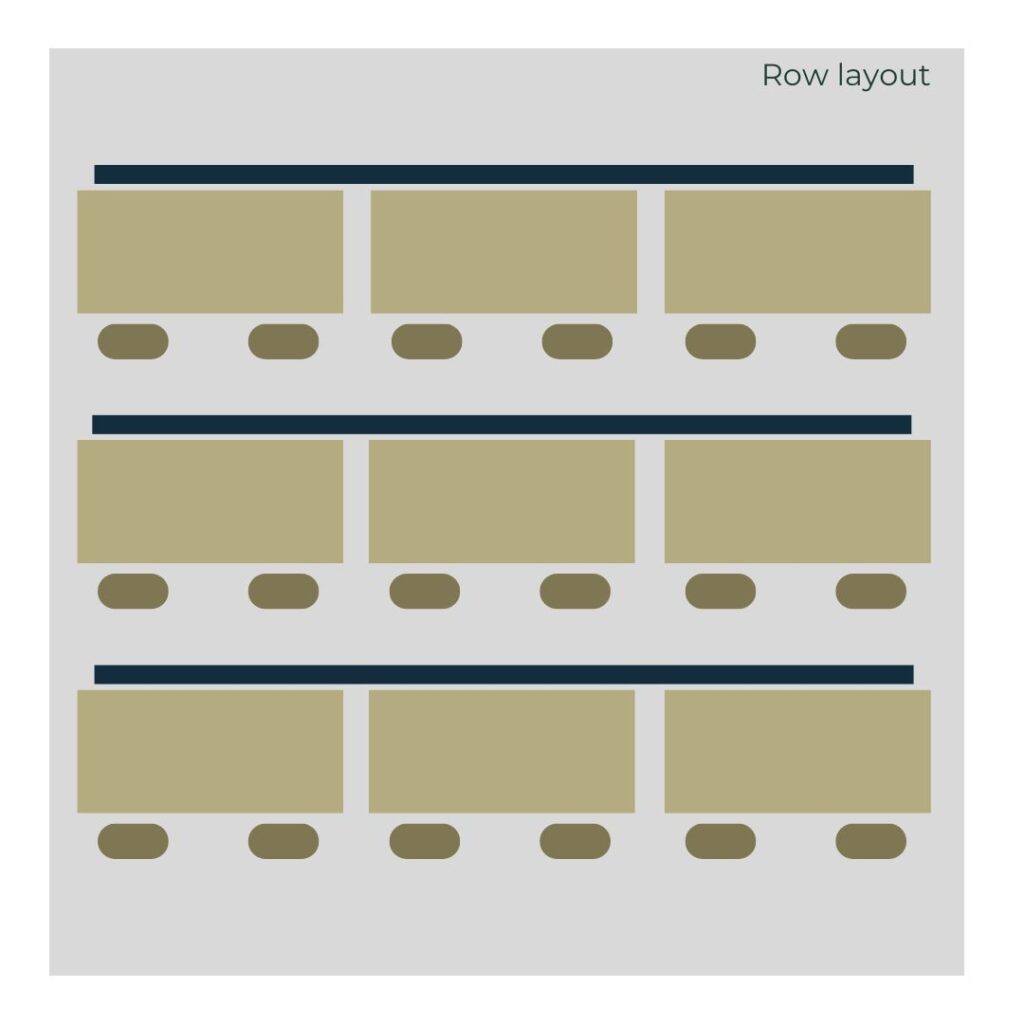
  • Keep groups to between 6 and 8 people – research has shown that this number of people on a bank of desks is more productive and needs less supervision (as it supervises itself)
  • Stick to an open plan to give yourself more flexibility
  • Be smart about storage – keep everything accessible but ensure storage doesn’t eat into valuable office space.

WorkWell recommends that a company ideally have an office with 60 – 80 square feet per employee. This is, however, just a general rule of thumb, and the actual office space your firm requires largely depends on the type of business you operate, your budget and what your employees are required to do.

For more tips on choosing an office and an efficient layout, subscribe to the WorkWell blog. You can also download our serviced office checklist to work out exactly what you need in a new office space.

If you’re looking to develop your business through the help of professional and well-facilitated office space, Leeds is a great choice of city in the north of England. WorkWell are a serviced office company that offers great serviced office space and meeting rooms for hire on the outskirts of Leeds.

How to avoid a culture clash when choosing office space

 Does your current office space meet your business’s culture needs? If not, perhaps it’s time for a change.

Committing to an office space for your business is a big decision. The office you choose now is likely to have a big impact on your business for several years ahead, so it’s important to invest the time to get it right.

Most businesses set out to rent office space with a ‘must-have’ list. Typically, this list consists of practical considerations such as cost, size, accessibility and location.

These practical considerations are extremely important, of course. The ideal office should be within budget but offer plenty of scope for your business to grow. You’ll also want the office to be easy for your employees and clients to get to.

Once these basic needs have been met, we think there’s a much bigger consideration for businesses to think about: the question of the culture match.

Why does culture matter for office space?

The culture of an office space is the one consideration businesses often struggle to put into words. They might comment on how the offices they’re looking at ‘feel’, or they may have an idea of the kind of image they want their new business base to project to their clients.

Either way, the culture of the office space is important as it will determine whether the space you choose is a good fit, or whether something doesn’t quite work.

Culture is important, whether you’re looking at serviced office suites or co-working spaces. The culture of an office building will determine what kinds of other businesses and professionals you’ll be working alongside, the type of features and facilities that are offered, and the general atmosphere of the building.

All these factors will be important to take into consideration, especially if you’re looking for a long-term home for your business.

How do you decide what kind of culture is right for you?

Of course, before you can find an office that has the same kind of culture as your business, it’s important to determine what that culture is.

Some businesses have a very obviously defined culture that’s set out in a business plan or mission statement. Other businesses have a more organically sourced culture that has often evolved from the bottom up.

Whichever camp your business falls into, it might be wise to gain a greater understanding of the values that are important to it before you make a big decision.

There are a number of ways that you can do this. Why not try to sum up your business in five words, get inspiration from companies that are well known for their cultures, or learn more about how to shape the culture of your business?

What questions should you ask when you look around?

The best way to get a feel for the culture of any potential office suites or co-working spaces is to go and look around them in person. We really encourage viewings at Carrwood Park as we think it’s the quickest and most effective way to determine whether a place is a good fit.

While you’re there, a few well-chosen questions can teach you a lot about the culture of a place.

Try asking things like:

  • What kind of breakout and meeting areas are available?
  • Who are the other businesses in the building?
  • Do most professionals stick to a business dress code?
  • What hours is the building open?
  • Are there a lot of social events?
  • Do you host networking events, and who normally attends?

What’s the payoff?

We genuinely believe that it’s worth investing the extra time to find an office that sits well with the culture of your business.

A well-matched culture will mean that you and your business feel right at home from the very first day. It will also mean that your new office is likely to continue to meet your needs for longer.

Finally, if you are successful in finding an office space with a complementary culture, the other businesses and professionals who are based there are also likely to be a great match for you. This could be great for networking, skill-sharing, and even socialising.

Does your current office space meet your business’s cultural needs? If not, perhaps it’s time for a change.


How to choose your office space strategically

Strategic plan blog.jpg

Where do you want your business to be in ten years’ time? How are you planning to get your business where you want it to be? Are you putting a recruitment plan in place in order to attract fresh talent and generate business growth?

Answering and planning for such questions are vital for commercial success. Believe it or not, an element of achieving business growth objectives lies within having the right office space for staff.

We’ve put together a strategic guideline for businesses wanting to choose the ideal office space for them:

Motivating staff through the right office space

Is Monday morning in your office brimming with optimism and vigour? If not, then it might be time to look for new office premises.

Flexibility is a buzzword in modern office space demands. Research shows that staff are happier when they are given more control over when and where they work.

Allowing staff to work in flexible office space crafts an environment of change, which inspires and motivates employees. Shared serviced offices can provide the ideal environment to meet and network with other companies, creating unique new business opportunities. These opportunities are even further inspired in offices with plenty of third space, using these creative spaces to encourage networking and chance meetings, often resulting in shared moments of genius. With a happier and more creative workforce, staff morale improves, retention rates are heightened, and productivity is generally enhanced.

As Morgan Lovell advise, location is also vitally important when choosing offices. If you’re hoping for a more motivated team, then part of your strategical office plan should consider the location of your space, and how easily accessible it is for commuters.

Consequently, this happier, loyal and more productive workforce will help put your company on the road to achieving the long term milestones you have set.

Selecting the perfect office size

The size of your office shouldn’t limit the size of your team – the size of your demand should. If part of your ten-year company vision is to grow, then surely you should be working from a space that can cater for the changing size of your business?

As Effective Workplace writes:

“Companies aim to grow, not to remain stagnant. As jobs increase and new business develops, you will find yourself in need of more space to house employees in every department.”

This is when moving into flexible working space, such as shared offices and co-working centres, can prove invaluable, as they give employers the opportunity to move with their business demands. If a business finds itself with a high employee headcount, it needs to have the facilities and space to house the higher volume of staff.

Does your current office environment have space for employees to take time away from their workstations, relax and revitalise their batteries? If not, moving into office space that nurtures that all-important ‘time out’ could prove an invaluable move in generating a strategic working environment.

More and more businesses are placing an emphasis on workspaces which positively impact employee wellbeing. Offices with views, plenty of daylight flooding through windows, and open green spaces on their doorstep, are conducive with boosting wellbeing within the workforce.

As a report from the World Green Building Council notes:

“Longer distance views, away from computer screens or written documents, allow the eyes to adjust and re-focus, which reduces fatigue, headaches, and the effects of eye strain in the long term. Views also have a positive impact on wellbeing, in part by providing a psychological connection with other groups of people while in a safe space.”

Think of your office space as an investment

Office space is a leading expense for most businesses. As part of strategic company growth planning, you should think of office space as an investment.

When choosing office space, you need to remember that you’re not just buying office space. You’re buying a strategic growth plan. The very best serviced office providers are experts in their field, and should be able to help you with any of your requirements.

Businesses need space where they can work collaboratively, and space to turn off and get comfortable. We’ve spent years looking at the functionality that teams need and how they use their space from day to day. The leading serviced office providers should be using those principles when designing their workspaces – investing in the most effective solutions for helping businesses grow, rather than cutting corners to offer cheaper office space.

Serviced office space, which offers many company essentials as standard, such as high-spec IT systems, meeting rooms at your disposal, car parking spaces, and so on, can mean that companies make significant savings, as opposed to having to pay for individual components that are essential for the day-to-day running of the business.

Is your IT infrastructure slow, temperamental and generally holding your business back? From high-speed Wi-Fi, to a professional IT team ready to offer support should a crisis occur, strategic office space planning should prioritise moving into an office with a high-quality, reliable IT infrastructure. Offices that are home to a high-spec tech infrastructure can help employees sharpen skills and help ease workloads.

Plan B…

The last thing any business wants is to be tied into a contract for a large office, with a tiny workforce occupying it due to an unexpected reduction in business. This is when having flexible office space can prove extremely important. Being able to ‘upsize’ or ‘downsize’ with a moment’s notice can save businesses significant amounts of money, not to mention the embarrassment of having a diminished team rattling around in an oversized office.

Do you want more than just office space? Would you rather have an office that helps your business to grow, engaging and inspiring your employees? As experts in serviced office space, we have years of experience working with businesses to create personalised working environments that bring out the very best in their employees. Why not book a viewing to see our professional serviced offices in Leeds and Harrogate?